

You wake up with a sharp, stinging pain deep in your throat. Swallowing feels like rubbing sandpaper against raw skin. You grab a flashlight, tilt your head back, and squint into the mirror — and there it is. A small, angry-looking sore sitting right on your tonsil. If that sounds familiar, you’re not alone. Tonsil ulcers affect a significant number of people, yet they’re frequently misunderstood, misdiagnosed, and left untreated far longer than they should be. Understanding what’s actually happening — and why — makes a real difference in how fast you recover.
What Are Tonsil Ulcers, Really?
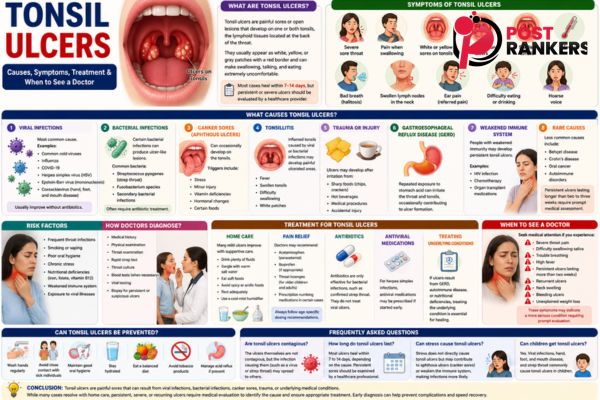
Tonsil ulcers, often called canker sores on the tonsils or aphthous ulcers, are small but intensely painful open sores that develop on the soft tissue of the tonsils. They typically appear as round or oval lesions with a white, gray, or yellowish center surrounded by a red, inflamed border. Because the tonsils sit at the back of the throat, these sores are notoriously harder to spot and significantly more uncomfortable than canker sores that form on the cheeks or gums.
Here’s something worth knowing right away: tonsil ulcers are not contagious. Unlike cold sores, which are caused by the herpes simplex virus and can spread through direct contact, tonsil ulcers don’t pass from person to person. That said, don’t let their non-contagious nature lull you into dismissing them. The pain they cause is very real, and in some cases, they point to a deeper underlying issue that deserves attention.
How Tonsil Ulcers Differ from Tonsillitis
People frequently confuse tonsil ulcers with tonsillitis, and it’s an easy mistake to make. Both conditions affect the tonsils, both cause throat pain, and both can make swallowing feel like an ordeal. However, they are distinctly different conditions. Tonsillitis involves widespread inflammation of the tonsils caused by a bacterial or viral infection. It usually brings a high fever, fatigue, congestion, and generalized swelling of both tonsils. Tonsil ulcers, on the other hand, typically appear as a single localized sore — often on just one tonsil — and they don’t produce the same systemic symptoms like fever and chills. If both tonsils look uniformly swollen and coated in white patches, tonsillitis is the more likely culprit. One distinct, crater-like sore on a single tonsil? That’s pointing toward a tonsil ulcer.
What Causes Tonsil Ulcers?
This is where things get a little complicated, because tonsil ulcers don’t have a single, definitive cause. Instead, a range of triggers and underlying conditions can bring them on, and identifying your specific trigger is the key to preventing them from coming back repeatedly.
Infections — Bacterial and Viral
Infections are among the most common drivers of tonsil ulcers. Bacterial infections — particularly streptococcal bacteria — can trigger ulceration on the tonsils, especially when the infection goes untreated for a period of time. On the viral side, infections involving the herpes simplex virus (HSV), human papillomavirus (HPV), or even the Epstein-Barr virus (the culprit behind mono) can lead to ulcer formation on and around the tonsils. Viral-related ulcers often develop more gradually and tend to come with additional symptoms like fatigue and body aches, especially when mononucleosis is involved.
Nutritional Deficiencies
This cause surprises a lot of people. Deficiencies in key vitamins and minerals — particularly iron, folate (vitamin B9), and vitamin B12 — significantly increase your susceptibility to canker sores and tonsil ulcers. When your body lacks these nutrients, the mucosal lining of your mouth and throat becomes more fragile and less capable of defending itself against minor irritations. As a result, small injuries or immune reactions that would normally go unnoticed end up developing into full-blown ulcers.
Stress and Immune System Disruption
Stress doesn’t just affect your mood — it directly suppresses your immune response. Additionally, chronic stress triggers inflammatory responses throughout the body, and the soft tissues of the mouth and throat are particularly vulnerable. Many people notice that tonsil ulcers flare up during periods of intense work pressure, sleep deprivation, or emotional strain. This isn’t a coincidence. The immune connection is well-established, and managing stress meaningfully can reduce how often these ulcers appear.
Acid Reflux and Food Sensitivities
Acid reflux — especially the kind that reaches the throat, called laryngopharyngeal reflux — can erode the soft tissues of the back of the throat, eventually leading to ulcer formation on or near the tonsils. Beyond reflux, certain food sensitivities, particularly to acidic or highly processed foods, can also irritate the tonsillar tissue and set the stage for ulcers to develop. Spicy foods, citrus, and foods with rough textures are frequent offenders.
Dental Irritants and Trauma
Sometimes the cause is mechanical rather than biological. Irritation from braces, retainers, or poorly fitted dental appliances can repeatedly trauma the soft tissues at the back of the mouth, including the tonsils. Even aggressive brushing or accidentally biting the inside of your throat can initiate the process that leads to a tonsil ulcer.
Recognizing the Symptoms
Tonsil ulcers announce themselves clearly — the problem is that people often mistake them for something else early on. The first sign is usually a tingling or burning sensation deep in the throat, which appears a day or two before the sore becomes visible. Once the ulcer forms fully, the pain intensifies noticeably. Swallowing becomes uncomfortable, sometimes even difficult. Eating or drinking anything acidic, spicy, or hot feels almost punishing.
H3: Less Obvious Signs to Watch For
Beyond the obvious throat pain, tonsil ulcers can also cause referred ear pain — a dull ache in one ear that seems unrelated until you realize the ulcer and the ear share nearby nerve pathways. Some people also experience mild bad breath, a feeling that something is caught in the throat, or slight swelling of the lymph nodes in the neck. These subtler symptoms are easy to attribute to other causes, which is part of why tonsil ulcers often go unrecognized for longer than they should.
Treatment Options That Actually Work
The good news is that most tonsil ulcers heal on their own within seven to fourteen days. The less exciting news is that those days can be genuinely uncomfortable without the right management strategies in place. Fortunately, several effective approaches can ease the pain and speed up the healing process considerably.
Medical Treatments
When a bacterial infection underlies the tonsil ulcer, a doctor will typically prescribe a course of broad-spectrum antibiotics, which usually resolves the infection within five to seven days. For cases involving viral infections, antiviral medications may help reduce the duration and severity of the ulcers. Doctors sometimes prescribe a steroid mouthwash for patients with large ulcers or those experiencing recurrent episodes, as steroids reduce inflammation and promote faster tissue healing. In particularly stubborn or painful cases, laser treatment performed by a dentist or oral specialist can accelerate healing and provide immediate pain relief.
Over-the-Counter Relief
Several OTC products provide meaningful relief while the ulcer heals naturally. Mouth rinses containing menthol or hydrogen peroxide help keep the area clean and reduce inflammation. Topical sprays or gels with benzocaine or phenol temporarily numb the area, offering short-term but welcome pain relief. NSAIDs like ibuprofen address both the pain and the underlying inflammation simultaneously, making them a particularly useful option for managing day-to-day discomfort.
Home Remedies Worth Trying
Home remedies may sound modest, but several of them are genuinely effective for managing tonsil ulcer discomfort. A saltwater gargle — made by dissolving one teaspoon of salt in a cup of warm water and gargling several times a day — soothes irritation and helps keep the affected area clean. Baking soda rinses work in a similar way by neutralizing acidity in the mouth and reducing the conditions that allow bacteria to thrive around the ulcer. Cold fluids and ice chips provide temporary numbing relief, especially after meals when the pain tends to spike. Honey, diluted in warm water or applied carefully near the area, has natural antimicrobial and anti-inflammatory properties that support healing.
H4: Foods to Avoid During Recovery
Diet plays a surprisingly significant role in how quickly a tonsil ulcer heals. Spicy foods, citrus fruits and juices, tomato-based products, alcohol, and anything with a rough or sharp texture can all aggravate the sore and extend healing time. Opting for soft, neutral foods — think oatmeal, yogurt, smoothies, mashed vegetables, and cold soups — makes eating far less painful and gives the ulcer the undisturbed environment it needs to heal.
When to Stop Waiting and See a Doctor
Most tonsil ulcers resolve independently within two weeks, but some situations demand professional evaluation rather than watchful waiting. See a doctor promptly if the sore hasn’t healed after two full weeks, if the pain is so severe that eating and drinking become extremely difficult, or if the ulcer is unusually large. Furthermore, if you develop a high fever alongside the ulcer, notice swelling that seems to spread, or experience difficulty breathing, seek medical care without delay. Recurring tonsil ulcers — those that appear again and again in the same spot or in clusters — also warrant a thorough examination, since they can sometimes indicate an underlying autoimmune condition or, in rare cases, signal something more serious that requires a biopsy to rule out.
Prevention Starts With Understanding Your Triggers
Once you’ve experienced a tonsil ulcer, preventing future ones becomes a real priority. Start by addressing any nutritional gaps in your diet — iron, B12, and folate are the key nutrients to check. Managing stress through regular sleep, exercise, and relaxation practices genuinely reduces recurrence rates. Avoid known food triggers, maintain excellent oral hygiene, and make sure any dental appliances fit properly and aren’t creating friction at the back of your mouth. If acid reflux plays a role in your case, working with a doctor to manage it consistently will protect your throat tissue over time.
Tonsil ulcers are painful, disruptive, and easy to overlook — but they’re also manageable. Knowing what causes them, how to treat them, and when to seek professional help puts you in a far better position the next time one appears.
