

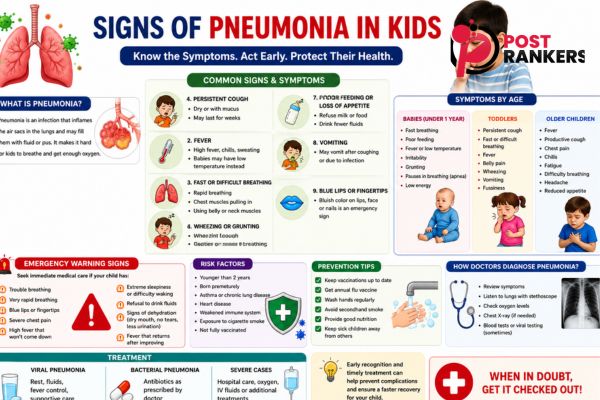
Every parent has been there — your child wakes up with a runny nose and a cough, and you assume it’s just another seasonal cold. Most of the time, you’re right. But sometimes, what starts as something ordinary quietly turns into something far more serious. Pneumonia in children is more common than most people realize, and catching it early can make a significant difference in how quickly your child recovers. Knowing the signs of pneumonia in kids isn’t just helpful — it’s genuinely important.
What Is Pneumonia, and Why Does It Hit Kids So Hard?
Pneumonia is an infection that targets the lungs directly. When a child picks it up — usually through bacteria, viruses, or, less commonly, fungi — the tiny air sacs in the lungs become inflamed and fill with fluid or pus. This makes it harder for the lungs to do their job, which is simply to move oxygen in and carbon dioxide out. In children, this process can escalate faster than it does in adults, especially in kids under five years old, whose immune systems are still developing.
What Causes It?
Viruses are actually the most common culprits in childhood pneumonia — respiratory viruses like RSV, influenza, adenovirus, and parainfluenza can all trigger it. Bacterial pneumonia, most often caused by Streptococcus pneumoniae, tends to hit harder and faster. Then there’s “walking pneumonia,” caused by Mycoplasma pneumoniae, which is a milder version — kids can feel sick but still manage to go about their day, which is exactly where it gets its nickname.
Who Is Most at Risk?
Children under five are particularly vulnerable. Beyond age, kids with weakened immune systems, asthma, or those regularly exposed to secondhand smoke face a higher risk. Even children in crowded settings — like daycare or school — are more susceptible simply because respiratory infections spread easily when kids share spaces, toys, and snacks.
Early Signs of Pneumonia in Kids: Don’t Dismiss These
One of the trickier things about pneumonia is that it often begins looking exactly like a cold. That’s precisely why parents miss it in the early days. Understanding what to watch for — and when symptoms cross a line — is key to responding at the right time.
It Starts Like a Cold (But Doesn’t Stay That Way)
Initially, your child might have a runny nose, mild cough, and a low-grade fever. These symptoms are easy to brush off. But with pneumonia, the situation progresses. The cough gets worse instead of better. The fever climbs. Your child starts looking more worn out than a typical cold would explain. If a child’s cold-like symptoms haven’t improved after seven to ten days — or if they seem to be getting worse rather than better — pneumonia should absolutely be on your radar.
Fever
Fever is one of the most consistent signs of pneumonia in kids. With bacterial pneumonia especially, the fever can come on fast and climb high — often over 102°F (38.9°C). Viral pneumonia tends to bring a lower, slower-building fever, but it’s still present. Furthermore, a fever that lingers or keeps spiking after a few days of illness is always worth a call to the pediatrician.
Persistent, Worsening Cough
A cough that produces mucus — particularly yellow or green phlegm — is a red flag. With pneumonia, the cough doesn’t follow the usual pattern of slowly improving over a week. Instead, it intensifies. Your child may cough so hard that they vomit, or the cough may keep them awake at night. This kind of cough isn’t just irritating; it’s the body trying hard to clear fluid from the lungs.
Rapid or Labored Breathing
This is one of the clearest and most telling signs of pneumonia in kids. When the lungs are compromised, the body compensates by breathing faster. You might notice your child taking more breaths per minute than usual, or breathing in a way that looks like hard work. Watch their chest and belly — if you can see the ribs with each breath, or the skin is pulling in at the neck and between the ribs, that’s a sign their body is really struggling to pull in enough air.
Warning Signs That Require Immediate Attention
Some signs of pneumonia in kids go beyond the “call your doctor tomorrow” category. These are the signals that mean right now — don’t wait, don’t wonder.
Bluish or Gray Lips and Fingernails
If your child’s lips, fingernails, or the skin around their mouth starts to look blue, gray, or pale in a way that seems off, this is a medical emergency. It means their blood isn’t carrying enough oxygen. This symptom, called cyanosis, requires an immediate trip to the emergency room — call 911 if needed.
Seesaw Breathing
This breathing pattern is exactly what it sounds like. As your child inhales, their chest caves inward while their belly pushes out. It looks labored, almost like a struggle with each breath. This unnatural pattern indicates severe respiratory distress and needs emergency care immediately.
Head Bobbing in Babies
In very young infants, head bobbing is one of the more alarming signs to watch for. You’ll notice the baby’s head moving upward and away from their body with each breath. It’s a sign that they’re working every muscle they have just to breathe. Don’t wait on this — get to an emergency room.
Nostril Flaring
When a child’s nostrils flare open noticeably with each breath, it signals they’re straining to take in more air. On its own, flaring might not seem dramatic, but combined with rapid breathing, fever, or any other warning sign, it becomes a clear indicator that the lungs need help.
How Bacterial and Viral Pneumonia Look Different
It’s worth understanding that not all pneumonia shows up the same way, and recognizing the differences can help you act appropriately.
Bacterial Pneumonia: Fast and Forceful
Bacterial pneumonia tends to announce itself quickly. A child who was playing fine in the morning might spike a high fever, develop a deep cough, and start breathing rapidly within hours. Chest pain — especially when breathing deeply or coughing — is also more common with bacterial infection. This type requires antibiotics, and the sooner treatment starts, the better.
Viral Pneumonia: Slower But Still Serious
Viral pneumonia builds more gradually. The cough may develop over several days, and wheezing is more common than with bacterial cases. While symptoms are often milder, viral pneumonia can take longer to clear — sometimes up to three weeks. Antibiotics won’t help here since the cause is a virus, so treatment focuses on supportive care: rest, fluids, and managing fever.
Walking Pneumonia: The One You Might Completely Miss
Walking pneumonia is its own category. Kids with this form often don’t feel sick enough to stop their daily activities, which is both what makes it manageable and what makes it easy to overlook. They may have a persistent dry cough, headache, mild fever, and fatigue — but nothing that screams “stay home.” Still, they’re contagious and should rest until they’re feeling better.
Additional Symptoms Worth Knowing
Beyond the respiratory symptoms, pneumonia in kids sometimes shows up in unexpected ways. Abdominal pain is one that frequently catches parents off guard — it can be mistaken for a stomach bug. Fatigue that’s deeper than normal, a complete loss of appetite, and general malaise (that “I don’t feel right” look that every parent recognizes) are also part of the picture. Older children may complain of a headache or muscle aches, which sometimes leads parents to initially suspect the flu.
When to Call the Doctor vs. When to Go to the ER
Knowing which situation calls for which response saves both time and stress.
Call your pediatrician if:
- Your child’s cold symptoms last more than 7–10 days without improving
- They develop a fever above 102°F (38.9°C)
- Their cough is worsening rather than improving
- They seem unusually tired or aren’t eating or drinking normally
Go to the emergency room immediately if:
- Your child is breathing very rapidly or with visible effort
- Their lips, fingernails, or skin around the mouth look blue or gray
- You notice chest retractions, head bobbing, or nostril flaring
- They’re unresponsive or unusually difficult to wake
- An infant under three months has any fever at all
A Note on Prevention
While no parent can completely shield their child from every germ, there are practical steps that genuinely reduce the risk. Vaccines are among the most powerful tools available — the pneumococcal vaccine and the flu vaccine both protect against major causes of pneumonia. Beyond that, teaching kids to wash their hands frequently, keeping them away from secondhand smoke, ensuring they eat well, and staying current on all vaccinations builds a strong foundation of protection.
Final Thoughts
Pneumonia isn’t something to panic about, but it is something to take seriously. The signs of pneumonia in kids can be subtle at first, which is precisely why staying informed matters. Trust your instincts as a parent — if something feels off beyond what a normal cold looks like, reach out to your child’s doctor. Early treatment makes recovery faster, smoother, and much less worrying for everyone involved. You know your child better than anyone else does, and when something doesn’t feel right, that gut feeling is worth acting on.
