

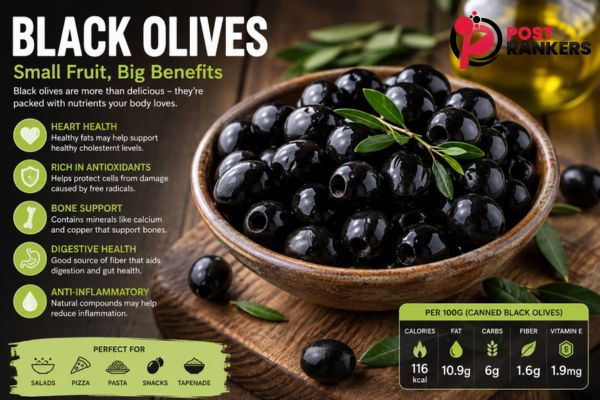
Black olives have earned a permanent place in kitchens worldwide because they combine rich flavor, impressive nutrition, and incredible versatility. Whether you enjoy them on pizza, in Mediterranean salads, or as a savory snack, black olives add depth to countless dishes. Beyond their taste, they also provide healthy fats, antioxidants, and essential nutrients that support overall wellness. Understanding how black olives are grown, processed, and used helps you make smarter choices while enjoying this classic ingredient.
What Are Black Olives?
Black olives are the fully ripened fruit of the olive tree (Olea europaea). Unlike green olives, which are harvested before reaching full maturity, black olives remain on the tree longer until they naturally darken. Their color ranges from deep purple to jet black, depending on the variety and growing conditions.
Fresh olives taste extremely bitter because they contain naturally occurring compounds called oleuropeins. Therefore, producers cure black olives through methods such as brining, dry curing, or water curing before they reach consumers. This process removes bitterness while developing the rich, savory flavor people recognize around the world.
Nutritional Value of Black Olives
Black olives provide more than bold flavor. They supply healthy fats, vitamins, minerals, and plant compounds that contribute to a balanced diet. Although they contain moderate calories, their nutritional profile makes them an excellent addition to meals when enjoyed in reasonable portions.
A typical serving of black olives contains:
- Healthy monounsaturated fats
- Vitamin E
- Iron
- Copper
- Calcium
- Fiber
- Small amounts of vitamin A
- Natural antioxidants
Because most commercial black olives are cured in saltwater, they also contain significant sodium. Consequently, individuals following low-sodium diets should monitor serving sizes or rinse olives before eating them.
Healthy Fats Support Everyday Wellness
One of the biggest nutritional strengths of black olives comes from their monounsaturated fat content. These heart-friendly fats, particularly oleic acid, may help maintain healthy cholesterol levels when consumed as part of a balanced eating pattern.
Unlike saturated fats found in many processed foods, monounsaturated fats offer nutritional benefits without sacrificing flavor. As a result, black olives fit naturally into Mediterranean-style diets that emphasize whole foods and healthy fats.
Health Benefits of Black Olives
Regularly enjoying black olives as part of a nutritious diet may support several aspects of health. While they are not a miracle food, their combination of healthy fats, antioxidants, and micronutrients makes them a valuable ingredient.
Rich Source of Antioxidants
Black olives contain powerful antioxidants, including vitamin E, polyphenols, and hydroxytyrosol. These compounds help protect cells from oxidative stress caused by free radicals. Additionally, antioxidants support healthy aging by reducing damage that naturally occurs over time.
Eating antioxidant-rich foods from various sources contributes to overall wellness and complements a diet filled with fruits, vegetables, whole grains, and healthy proteins.
May Promote Heart Health
Heart health remains one of the most researched benefits associated with olives and olive products. The monounsaturated fats found in black olives may help support healthy blood cholesterol levels when replacing less healthy fat sources.
Furthermore, plant-based compounds found in olives may help reduce inflammation, which plays a role in long-term cardiovascular health. Combined with regular exercise and a nutritious diet, black olives can become part of a heart-conscious lifestyle.
Supports Healthy Skin
Vitamin E acts as an important antioxidant that helps protect skin from environmental stress. Because black olives naturally contain this nutrient, they contribute to overall skin health when included in a balanced diet.
Although no single food guarantees perfect skin, consistent intake of vitamin-rich foods helps support the body’s natural repair and maintenance processes.
Provides Dietary Fiber
Black olives supply modest amounts of dietary fiber that support digestive health. Fiber promotes regular bowel movements while helping people feel satisfied after meals.
Although olives should not serve as your primary fiber source, they complement vegetables, legumes, fruits, and whole grains to increase total daily fiber intake.
Different Types of Black Olives
Not all black olives taste the same. Different varieties develop unique textures, colors, and flavor profiles based on their origin and curing methods.
Kalamata Olives
Kalamata olives originate from Greece and feature a deep purple appearance with an almond-like shape. They offer a rich, fruity taste and work exceptionally well in Greek salads, pasta dishes, and Mediterranean recipes.
Mission Olives
Mission olives are among the most common black olives produced in the United States. They deliver a mild flavor and soft texture, making them popular for pizzas, sandwiches, and everyday cooking.
Niçoise Olives
These small French olives provide an intense, slightly salty flavor. Because of their bold taste, chefs frequently include them in salads, seafood dishes, and traditional Mediterranean recipes.
Cerignola Black Olives
Cerignola olives stand out because of their unusually large size. Their buttery texture and mild flavor make them an excellent choice for appetizer platters and charcuterie boards.
Black Olives vs. Green Olives
Many shoppers wonder whether black olives and green olives differ beyond color. Although both come from the same tree, the harvesting stage significantly affects their flavor, texture, and nutritional characteristics.
Green olives are harvested before ripening, giving them a firmer texture and more bitter taste. Black olives remain on the tree longer, allowing natural sugars and oils to develop. Consequently, they become softer, milder, and slightly richer in flavor.
Nutritionally, both varieties provide similar healthy fats, vitamins, and minerals. However, curing methods often influence sodium levels more than the olives themselves.
Popular Culinary Uses for Black Olives
Black olives complement an impressive variety of dishes because their savory flavor blends easily with numerous ingredients. Their versatility explains why they remain a staple in cuisines throughout Europe, North America, and the Mediterranean region.
Common uses include:
- Tossing into fresh garden salads
- Adding to homemade pizza
- Mixing with pasta dishes
- Stuffing sandwiches and wraps
- Blending into olive tapenade
- Serving on charcuterie boards
- Incorporating into grain bowls
- Pairing with roasted vegetables
Because black olives require no additional cooking, they provide a convenient way to add flavor and nutrition without increasing meal preparation time.
How to Choose and Store Black Olives
Selecting quality black olives begins with reading product labels carefully. Choose olives with simple ingredient lists that avoid unnecessary preservatives whenever possible. Additionally, consider reduced-sodium varieties if you monitor salt intake.
After opening a jar or can, transfer unused olives into a clean container with enough brine to keep them submerged. Refrigeration helps preserve freshness and flavor for several weeks. If the olives develop an unusual odor, discoloration, or mold, discard them immediately.
Are Black Olives Good for Everyone?
Most healthy adults can safely enjoy black olives as part of a balanced diet. However, moderation remains important because cured olives often contain considerable sodium.
Individuals with hypertension or those following physician-recommended sodium restrictions should pay particular attention to serving sizes. Fortunately, rinsing olives under cold water removes some surface salt without significantly affecting taste.
People with olive allergies, although uncommon, should naturally avoid consuming olives and products derived from them.
Conclusion
Black olives offer far more than a delicious topping for pizza or salads. Their combination of healthy monounsaturated fats, antioxidants, vitamins, and minerals makes them a nutritious ingredient that fits comfortably into many healthy eating patterns. At the same time, their rich flavor and culinary versatility allow them to enhance everything from Mediterranean dishes to simple snacks. When enjoyed in moderation and balanced with other wholesome foods, black olives provide both outstanding taste and meaningful nutritional value, making them a smart addition to everyday meals.
