

Introduction
Leg ulcers are more than just slow-healing wounds. They often signal an underlying circulation problem that requires proper medical attention. Among the most common types of chronic leg wounds are venous ulcers and arterial ulcers. While both conditions affect the lower limbs and can significantly impact quality of life, they develop for very different reasons and require different treatment approaches.
Understanding venous vs arterial ulcers is essential for patients, caregivers, and healthcare professionals alike. Misidentifying the type of ulcer can delay healing and even lead to serious complications. This guide explores the causes, symptoms, diagnosis, treatment options, and prevention strategies for both conditions.
Understanding Venous vs Arterial Ulcers is essential for identifying the root cause of chronic leg wounds and choosing the most effective treatment strategy.
What Are Leg Ulcers?
A leg ulcer is an open sore that develops when the skin breaks down and fails to heal properly. These wounds typically appear on the lower legs, ankles, feet, or toes and can persist for weeks or even months. Although several conditions can cause leg ulcers, poor blood circulation remains one of the leading factors.
When blood flow is disrupted, tissues do not receive the oxygen and nutrients necessary for healing. As a result, even minor injuries can develop into chronic wounds. The two most common circulation-related ulcers are venous ulcers and arterial ulcers.When discussing Venous vs Arterial Ulcers, venous ulcers represent the most common type of leg ulcer caused by poor vein function.
Understanding Venous Ulcers
Venous ulcers occur when veins in the legs struggle to return blood efficiently to the heart. This condition, known as chronic venous insufficiency, causes blood to pool in the lower extremities. Over time, increased pressure inside the veins damages surrounding tissues and eventually leads to ulcer formation.A proper comparison of Venous vs Arterial Ulcers reveals that arterial ulcers stem from reduced blood flow rather than blood pooling.
Common Causes of Venous Ulcers
Several factors can contribute to the development of venous ulcers. Varicose veins are among the most common causes because damaged vein valves allow blood to flow backward and accumulate in the legs. Additionally, a history of deep vein thrombosis can impair circulation and increase ulcer risk.
Obesity, prolonged standing, limited physical activity, and aging can further weaken venous function. As these risk factors progress, the likelihood of chronic wounds increases significantly.
Symptoms of Venous Ulcers
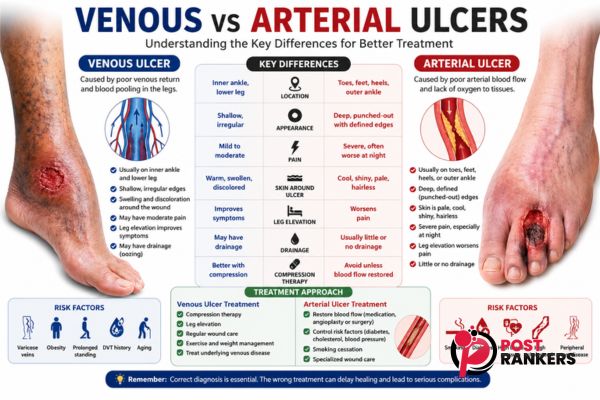
Venous ulcers typically develop around the inner ankle or lower leg. These wounds often appear shallow with irregular borders and may produce noticeable drainage. The surrounding skin frequently becomes swollen, discolored, and itchy.
Many patients experience aching or heaviness in the legs, particularly after standing for long periods. Fortunately, elevating the legs often provides temporary relief because it helps reduce venous pressure.
Understanding Arterial Ulcers
Arterial ulcers develop when arteries fail to deliver enough oxygen-rich blood to tissues. This condition usually results from peripheral artery disease, which narrows or blocks blood vessels due to plaque buildup. Without adequate blood supply, skin and underlying tissues become vulnerable to breakdown.
Unlike venous ulcers, arterial ulcers are directly linked to poor oxygen delivery rather than blood pooling. Consequently, these wounds often heal very slowly and can become extremely painful.
Common Causes of Arterial Ulcers
Atherosclerosis is the primary cause of arterial ulcers. This condition gradually restricts blood flow through hardened arteries. Smoking, diabetes, high cholesterol, and high blood pressure significantly increase the risk of developing arterial disease.
In addition, advanced age and a family history of cardiovascular disease can contribute to reduced circulation. As arterial blockages worsen, tissues receive less oxygen, making ulcer formation more likely.
Symptoms of Arterial Ulcers
Arterial ulcers commonly appear on the toes, heels, feet, or outer ankle. They usually have a deep, punched-out appearance with clearly defined edges. Unlike venous ulcers, these wounds often produce little drainage.
Pain is one of the most distinctive symptoms. Many individuals experience severe discomfort, especially at night or when resting. Furthermore, the skin surrounding the ulcer may appear shiny, pale, cool, and hairless due to poor circulation.
Venous vs Arterial Ulcers: Key Differences
Although both types of ulcers affect the lower extremities, several characteristics help distinguish them.
Location
Venous ulcers generally develop around the inner ankle and lower leg. Arterial ulcers, however, are more likely to occur on the feet, heels, toes, and pressure points where blood supply is already limited. One of the easiest ways to distinguish Venous vs Arterial Ulcers is by examining where the ulcer develops on the leg or foot.
Appearance
Venous ulcers tend to be shallow and irregular in shape. The surrounding skin often shows signs of swelling and discoloration. Arterial ulcers, on the other hand, are deeper with sharply defined edges and may appear dry or necrotic The visual characteristics of Venous vs Arterial Ulcers provide valuable clues during diagnosis.
Pain Level
Pain patterns also differ significantly. Venous ulcers can cause discomfort, but symptoms often improve when the leg is elevated. Arterial ulcers are typically much more painful because tissues are deprived of oxygen. In many cases, elevating the leg actually worsens the pain. Pain intensity is another major factor healthcare providers use when evaluating Venous vs Arterial Ulcers.
Skin Condition
The skin around venous ulcers is usually warm, swollen, and darkened due to blood pooling. By contrast, arterial ulcers are often surrounded by cool, pale, and shiny skin that reflects poor blood flow.
How Doctors Diagnose Leg Ulcers
Accurate diagnosis is essential because treatment varies depending on the ulcer type. Healthcare providers begin by reviewing the patient’s medical history and performing a physical examination. They assess wound location, appearance, skin changes, and circulation patterns.
Diagnostic Tests
Several tests help confirm the diagnosis. Doppler ultrasound is commonly used to evaluate blood flow in veins and arteries. The ankle-brachial index measures blood pressure differences between the arms and legs, helping identify peripheral artery disease.
In some cases, advanced imaging studies may be necessary to determine the extent of vascular damage. These evaluations allow physicians to create a treatment plan tailored to the patient’s specific condition.
Treatment for Venous Ulcers
Successful treatment focuses on improving venous circulation while supporting wound healing. Compression therapy remains the gold standard for managing venous ulcers because it reduces swelling and promotes blood flow back toward the heart.
Regular wound cleaning and appropriate dressings help create an environment conducive to healing. Additionally, patients are often encouraged to elevate their legs several times daily to decrease venous pressure.
Lifestyle Changes for Recovery
Exercise plays an important role in recovery because muscle contractions help move blood through the veins. Walking, weight management, and avoiding prolonged standing can improve long-term outcomes.
For individuals with severe venous insufficiency, minimally invasive procedures or surgery may be recommended to correct damaged veins and prevent recurrence.
Treatment for Arterial Ulcers
Treating arterial ulcers requires restoring adequate blood flow to affected tissues. Without addressing the underlying circulation problem, wound healing remains extremely difficult.
Healthcare providers often recommend lifestyle modifications such as quitting smoking, controlling diabetes, lowering cholesterol levels, and managing blood pressure. These measures help slow disease progression and improve vascular health.
Medical and Surgical Options
In many cases, procedures such as angioplasty or bypass surgery are necessary to reopen blocked arteries. Once blood flow improves, wound care becomes more effective and healing can begin.
Unlike venous ulcers, compression therapy should not be used unless arterial circulation has been carefully evaluated. Applying compression to severely compromised arteries can worsen tissue damage.The debate around Venous vs Arterial Ulcers often centers on differences in appearance, pain levels, and healing patterns.One of the easiest ways to distinguish Venous vs Arterial Ulcers is by examining where the ulcer develops on the leg or foot.
Preventing Venous and Arterial Ulcers
Prevention starts with maintaining healthy circulation. Individuals at risk for venous ulcers should stay physically active, maintain a healthy weight, and avoid sitting or standing in one position for extended periods. Compression stockings may also help support vein function and reduce swelling.
For arterial ulcer prevention, cardiovascular health is crucial. Quitting smoking, eating a balanced diet, controlling blood sugar, and managing cholesterol levels can significantly reduce the risk of peripheral artery disease.
Regular medical checkups are equally important because early detection of circulation problems allows for timely intervention before ulcers develop.The visual characteristics of Venous vs Arterial Ulcers provide valuable clues during diagnosis.
Conclusion
When comparing venous vs arterial ulcers, the most important distinction lies in the underlying circulation problem. Venous ulcers result from blood pooling in the veins, whereas arterial ulcers occur because tissues do not receive enough oxygen-rich blood. Although both conditions can be serious, recognizing their differences helps ensure proper diagnosis and treatment.
Early intervention remains the key to successful healing. By understanding the symptoms, causes, and treatment options associated with each type of ulcer, patients can take proactive steps to protect their health and improve their quality of life. Whether the issue involves venous insufficiency or arterial disease, addressing the root cause offers the best chance for long-term recovery and ulcer prevention.
