

Most people assume a bad cough means a bad cold, and honestly, that assumption is usually right. But sometimes that cough is your lungs waving a red flag. Pneumonia symptoms often disguise themselves as something milder at first, which is exactly why so many cases get caught later than they should. This guide walks through what pneumonia actually feels like, how it shows up differently depending on its cause, and when those symptoms cross the line from “annoying” to “see a doctor now.”
What Pneumonia Actually Is
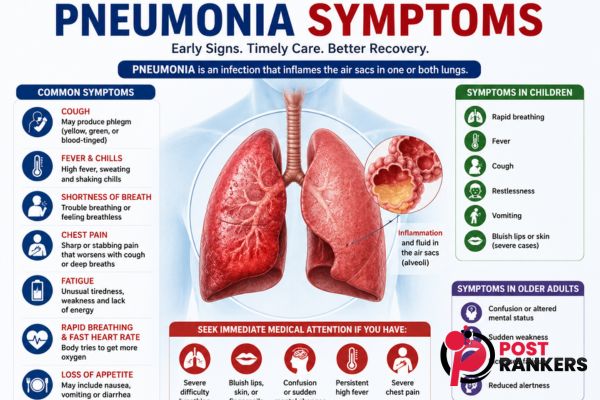
Pneumonia is a lung infection that inflames the tiny air sacs in your lungs, called alveoli. When you’re healthy, those air sacs fill with air and help oxygen move into your bloodstream. During pneumonia, they fill with fluid or pus instead, which is why breathing starts to feel like work even when you’re sitting still.
Bacteria, viruses, and sometimes fungi can all trigger this infection, so symptoms and severity can look completely different from one case to the next. A teenager with walking pneumonia might barely slow down, while an older adult with bacterial pneumonia could end up in the ER within a day. The cause matters, and so does the person catching it.
The Core Symptoms Everyone Should Know
Cough That Won’t Quit
A persistent cough is usually the first thing people notice, and it tends to stick around longer than a typical cold cough. With pneumonia, that cough often produces mucus that’s green, yellow, or even tinged with blood. It’s deeper and more productive than the dry tickle from allergies or minor throat irritation, and it usually gets worse before it gets better.
Fever and Chills
Fever shows up in most pneumonia cases, sometimes climbing surprisingly high. Bacterial pneumonia in particular can push body temperature toward 104 or even 105 degrees Fahrenheit, often paired with heavy sweating and teeth-chattering chills. Viral pneumonia tends to bring a milder fever that creeps up gradually rather than spiking overnight, though this isn’t a hard rule.
Shortness of Breath
This is the symptom that tends to scare people the most, and rightfully so. As the air sacs fill with fluid, your lungs can’t move oxygen as efficiently as they should. You might notice breathlessness during normal activities like climbing stairs, or in serious cases, even while resting. Any breathing difficulty deserves attention rather than a wait-and-see approach.
Chest Pain
Sharp or stabbing chest pain that worsens when you cough or take a deep breath is a classic pneumonia symptom, caused by inflammation irritating the lining around your lungs. The pain can feel alarming, especially if it spreads toward your back or shoulder, but it’s a fairly common part of how pneumonia presents itself.
Fatigue and Weakness
Pneumonia doesn’t just attack your lungs; it drains your entire body. Many people describe feeling wiped out in a way that regular rest doesn’t fix. This bone-deep tiredness often lingers even after other symptoms ease up, so don’t be surprised if you feel sluggish for a week or two after the worst has passed.
How Symptoms Differ by Type
Bacterial Pneumonia
Bacterial infections tend to hit hard and fast. Symptoms can develop suddenly, bringing high fever, rapid breathing, a racing pulse, and sometimes a bluish tint around the lips or fingertips from low oxygen. This type generally requires antibiotics and is often more severe than its viral counterpart, so quicker medical attention typically leads to a smoother recovery.
Viral Pneumonia
Viral pneumonia usually builds more gradually, often starting with flu-like symptoms such as fever, dry cough, headache, and muscle aches. Over a day or two, those symptoms intensify and breathing becomes noticeably harder. While viral pneumonia is frequently milder than bacterial pneumonia, it can still escalate quickly in young children, older adults, or anyone with a weakened immune system.
Walking Pneumonia
Walking pneumonia, caused by Mycoplasma bacteria, earned its nickname because people often feel well enough to keep going about their day. Symptoms tend to be milder — a nagging cough, low-grade fever, sore throat, and general fatigue. That said, “milder” doesn’t mean harmless; left untreated, it can develop into something more serious.
Symptoms by Age Group
Infants and Young Children
Babies and toddlers don’t always show textbook symptoms, which makes pneumonia trickier to catch in this age group. Instead of a clear fever and cough, infants might just seem unusually fussy, tired, or uninterested in feeding. Vomiting and noisy or rapid breathing are common red flags parents shouldn’t brush off as a passing bug.
Older Adults
Symptoms often look different in seniors, sometimes presenting as confusion or a sudden change in mental sharpness rather than the classic fever-and-cough combo. Body temperature might even drop below normal instead of spiking. Because these signs are easy to mistake for general aging, pneumonia in older adults frequently gets diagnosed later than it should.
Adults With Weakened Immune Systems
People managing chronic illnesses, undergoing cancer treatment, or living with conditions like diabetes or COPD often experience fewer obvious symptoms despite a more serious infection underneath. This mismatch between how sick someone looks and how sick they actually are makes regular checkups and quick reporting of new symptoms especially important for this group.
When Pneumonia Symptoms Become an Emergency
Red Flags You Shouldn’t Ignore
Certain symptoms mean it’s time to stop waiting and get medical help immediately: difficulty breathing or breathlessness at rest, a bluish tint to the lips or fingertips, chest pain that won’t ease up, sudden confusion, or a fever that keeps climbing despite medication. This matters most for children under two, adults over 65, pregnant women, and anyone with a chronic illness or weakened immune system.
Telling Pneumonia Apart From a Cold or Flu
Pneumonia Symptoms genuinely hard to distinguish pneumonia from a bad cold or flu in the early days, since symptoms overlap so much. A few clues set pneumonia apart: symptoms that worsen instead of improving, a cough producing colored or bloody mucus, chest pain with breathing, and new breathlessness. A cold typically fades on its own, while pneumonia often demands treatment to fully resolve.
How Doctors Confirm a Diagnosis
A physical exam usually comes first, with your doctor listening to your lungs for crackling or bubbling sounds that suggest fluid buildup. Testing often follows, including a chest X-ray to spot inflammation, blood tests to identify infection markers, and pulse oximetry to check how well oxygen is moving through your blood. These tools together pinpoint the diagnosis and the likely cause.
Final Thoughts on Recognizing Pneumonia Early
Pneumonia symptoms can range from barely noticeable to genuinely frightening, and that range is exactly why paying attention matters. A cough that lingers, a fever that won’t break, or breathing that suddenly feels harder are worth taking seriously rather than brushing aside. Catching pneumonia early generally means a faster, easier recovery, while waiting too long can turn a treatable infection into something far more serious.
If you or someone you care about is showing these warning signs, don’t talk yourself out of getting checked. Lungs aren’t an organ worth gambling with, and a quick visit to a healthcare provider is a small price to pay for peace of mind and a faster path back to feeling normal.
