

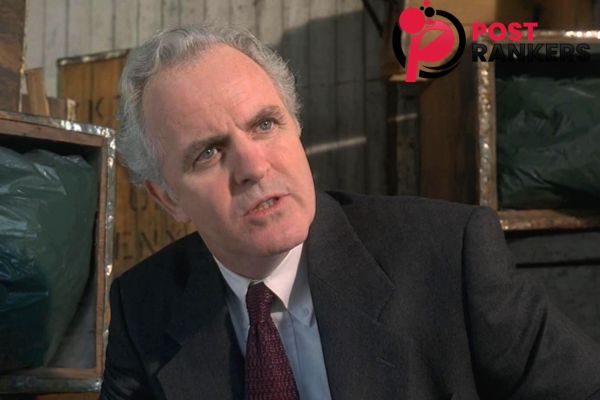
There is a specific kind of actor that every great film and television production quietly depends on. Not the star whose name appears above the title. Not the supporting player chasing an award. Rather, the steady, commanding presence in the background who makes every scene feel grounded, authentic, and real. James Handy was that actor — and for nearly five decades, he showed up to set, delivered, and walked away without asking for a single curtain call. When he died on June 3, 2026, at the age of 81, Hollywood lost far more than a familiar face. It lost one of the most dependable craftsmen the industry had ever quietly produced.
From New York City to Hollywood: The Early Years of James Handy
James Michael Handy was born in New York City, and the city shaped him in ways that proved permanent. Growing up in one of America’s most culturally layered environments gave him an instinctive feel for performance, for character, and for the kind of emotional truth that separates a good actor from a forgettable one. New York in his formative years was a place that demanded substance over flash, and Handy took that lesson seriously from the very beginning of his career.
James Handy made his professional acting debut in 1977 on the long-running daytime soap opera Ryan’s Hope. It was a humble starting point, but it planted the seed for everything that followed. Rather than seeking overnight fame, Handy chose a different path entirely. He committed to the work itself building skills, taking roles, studying characters and that commitment became the foundation of one of the most durable careers in modern American entertainment history.
Over the years that followed, he steadily expanded his range. He could portray authority with quiet weight, vulnerability with restrained honesty, and moral complexity with a naturalness that never felt performed. Directors noticed. Casting agents kept calling. And the credits kept accumulating slowly, steadily, relentlessly.
James Handy on the Big Screen: A Film Legacy Built Over Decades
From K-9 to Top Gun: Maverick — The Blockbuster Thread
James Handy’s film career reads like a tour through the most beloved American movies of the past four decades. He first caught wide attention playing Byers in the 1989 buddy-cop comedy K-9, a role he reprised in the 1999 sequel K-911. Both performances demonstrated what would become his trademark — the kind of lived-in, believable supporting work that audiences appreciate even when they cannot immediately name who delivered it.
From there, his film résumé grew into something genuinely impressive. He brought grounded tension to the 1990 horror film Arachnophobia, where he played Milton Briggs alongside Jeff Daniels. The following year, he appeared in The Rocketeer, holding his own in a visually spectacular production that demanded actors who could anchor spectacle with human credibility. In 1992, he had a role in Kuffs, and by 1993 he was appearing in Dave, a politically sharp comedy that required every cast member to carry genuine dramatic weight.
Then came Jumanji in 1995 a film that introduced James Handy to an entirely new generation of moviegoers. His role as the eccentric exterminator became one of the movie’s most memorable supporting turns, and it cemented his reputation as a performer who could inhabit even the most vividly drawn supporting characters with total conviction.
The Later Films That Defined His Final Chapters
As his career moved into the 2000s and beyond, James Handy continued to take on roles in films that mattered. He played a priest in M. Night Shyamalan’s Unbreakable in 2000, a psychologically layered superhero thriller that has only grown in critical appreciation over time. In 2017, he appeared in Logan the gritty, Oscar-nominated Wolverine film starring Hugh Jackman as the doctor treating the aging mutant hero. It was a small role, but it carried emotional weight, as every James Handy role inevitably did.
His final major film credit, and arguably his most high-profile in years, came with Top Gun: Maverick in 2022. Cast as Jimmy the bartender opposite Tom Cruise and Jennifer Connelly in the $1.5 billion global blockbuster, Handy delivered a warm, assured performance that reminded audiences why his face had felt familiar for so long. For younger viewers, it was an introduction. For those who had followed his career across decades, it felt like a richly deserved final bow on the biggest stage of his life.
Television: The Medium Where James Handy Became a National Fixture
Decades of Defining Small-Screen Performances
If James Handy’s film career was impressive, his television work was nothing short of extraordinary. Over nearly five decades, he appeared in an almost incomprehensible range of network dramas, procedurals, comedies, and miniseries. His small-screen credits include Quantum Leap, Murder, She Wrote, The X-Files, Law and Order, ER, Third Watch, Cold Case, Without a Trace, The Young and the Restless, Criminal Minds, Castle, NCIS: Los Angeles, 9-1-1, and CSI: NY and that list does not even scratch the surface of everything he appeared in across his career.
These were not throwaway guest spots. In show after show, James Handy delivered performances that elevated the material around him and gave episodic television the kind of professional credibility that keeps audiences trusting a series. Directors and showrunners trusted him precisely because he never phoned anything in, no matter how brief his screen time.
Captain Haverhill in NYPD Blue
One of his most celebrated recurring television roles came on NYPD Blue, the landmark police drama that ran for twelve seasons and redefined what network television could do. Handy appeared in ten episodes as Captain Haverhill, bringing the kind of gruff authority to the role that the show’s tone demanded. His chemistry with the core cast felt completely organic, and his appearances consistently added dramatic weight to whichever storyline he inhabited.
Arthur Devlin in Alias
Perhaps the most substantial recurring role of James Handy’s television career came through JJ Abrams’ spy thriller Alias, starring Jennifer Garner as a double agent navigating the dangerous world of intelligence espionage. Handy played CIA Director Arthur Devlin across nine episodes, commanding every scene he entered with a measured, authoritative presence that gave the show’s mythology real institutional weight. The role required an actor who could project power while simultaneously suggesting hidden depth and moral complexity. James Handy did exactly that, and then some.
Lou Handleman in Profiler and The West Wing Arc
His recurring work as Lou Handleman in Profiler showed audiences yet another dimension of his craft a warmer, more nuanced supporting presence built across multiple episodes through quiet consistency rather than dramatic fireworks. Similarly, his appearances as Representative Joe Bruno in The West Wing demanded the kind of political credibility and understated gravitas that the show’s writers trusted only to actors of genuine ability. Handy delivered both roles without missing a step, adding to a television legacy that few working actors of his generation could match.
The Tragic Death That Shook an Industry
On the morning of June 3, 2026, officers with the Los Angeles Police Department responded to a 911 call from a residence in the Tarzana neighborhood. The caller’s words to dispatchers were deeply unsettling. When police arrived at the property on Erwin Street, they discovered James Handy unconscious in the front yard, suffering from a stab wound to the chest. Despite the efforts of paramedics who rushed him to a nearby hospital, he was pronounced dead shortly after arrival.
The suspect, 44-year-old Michael Gledhill, approached officers at the scene and identified himself as the person they were looking for. He was arrested and subsequently booked on a single count of murder. Gledhill was the son of Handy’s girlfriend and had been living at the same residence. The case sent shockwaves through the entertainment industry not only because of how senseless and violent it was, but because of the renewed attention it brought to a man whose extraordinary contributions to American film and television had never received the public recognition they fully deserved.
A Legacy That Will Outlast the Headlines
James Handy never received an Oscar nomination. His name never appeared above a movie title. But director Brian Connors, who directed him in the 2021 comedy Senior Entourage, called him one of the “finest character actors” in the entire industry and every person who ever worked alongside him would likely say the same without hesitation.
His career, spanning nearly five decades and accumulating close to 150 credits, stands as powerful evidence that dedication and craft matter more than stardom in the long run. Hollywood histories are written about the stars, but they are built by performers like James Handy the ones who give the stories their bones, their texture, and their truth. That legacy will endure long after the headlines about his death have faded. It already has.
