

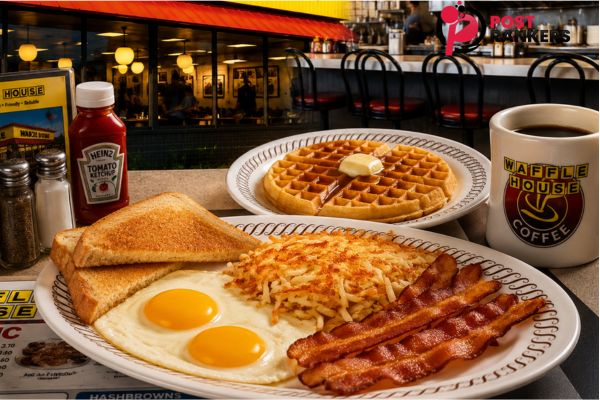
There’s something almost mythical about pulling into a Waffle House parking lot at 2 a.m. and finding the lights still on, the grill still sizzling, and a cook ready to take your order like it’s the middle of the afternoon. That’s the magic of Waffle House. It’s not fancy, it’s not trying to be trendy, and yet it’s managed to become one of the most beloved restaurant chains in American history. So what exactly makes this yellow-signed diner such a cultural fixture?
The Story Behind Waffle House
Waffle House opened its very first location over the Labor Day weekend back in 1955, in a small building on East College Avenue in Avondale Estates, Georgia. Two men, Joe Rogers Sr. and Tom Forkner, dreamed up the concept together after meeting through an unlikely connection: a house sale. From that modest beginning, they built something that would eventually stretch across the entire country.
Rogers wasn’t new to the restaurant world. Before starting Waffle House, he worked as a short-order cook, which gave him a front-row seat to how fast food could be served without sacrificing table service. He wanted speed, but he also wanted the warmth of sitting down and being waited on. That combination became the blueprint for every location that followed, and it’s still the formula today.
How the Name Came to Be
Believe it or not, waffles weren’t originally meant to be the star of the menu. The restaurant’s founders had a sixteen-item menu when they opened, and waffles just happened to be the most profitable item on it. Forkner suggested naming the place after that dish, and the rest became history. It’s a simple origin story, but it stuck, and now the name is instantly recognizable nationwide.
What Makes Waffle House So Different
Unlike most fast-food chains, Waffle House never really closes. It operates 24 hours a day, 365 days a year, rain or shine, holiday or hurricane. That kind of reliability isn’t just a marketing gimmick, either. It’s baked into the company’s DNA, and customers have come to depend on it in ways that go far beyond breakfast cravings.
Because it never shuts its doors, Waffle House has become something of an emergency benchmark. Government agencies actually track whether local locations stay open, close entirely, or offer a limited menu during natural disasters. This informal measure, often nicknamed the “Waffle House Index,” helps officials gauge how severe a storm’s impact really is. Few restaurants can claim that kind of unofficial civic importance.
The Menu That Keeps People Coming Back
At its core, Waffle House serves Southern comfort food, and it does so without pretense. Waffles, hash browns, eggs, bacon, and grits dominate the menu, along with hearty plates built for early mornings or late-night cravings. The hash browns, in particular, have developed a cult following, especially since customers can customize them nearly endless ways, from “scattered and smothered” to piled high with cheese, onions, and chili.
What’s interesting is how consistent the experience feels no matter which location you visit. Whether you’re in Georgia, Texas, or Indiana, the menu structure stays largely the same, and so does the diner’s signature checkerboard floor and open kitchen layout. That consistency builds trust, and trust keeps people walking through those glass doors at all hours.
A Regional Icon With National Reach
Waffle House now operates more than 2,000 locations spread across 25 states, with its strongest presence throughout the Midwest and South. In many of these regions, it’s not just a restaurant; it’s a genuine cultural landmark. Locals often measure road trips by how many Waffle House stops they’ll pass, and travelers frequently seek them out specifically for that reason.
Interestingly, growth hasn’t come without a few bumps along the way. Back in 2008, Waffle House, Inc. acquired one of its largest franchise operators, North Lake Foods, after that company filed for bankruptcy protection. Rather than letting locations disappear, Waffle House absorbed operations and kept the brand’s presence intact throughout the Southeast, reinforcing just how central these restaurants are to communities in that region.
The Social Media Personality Nobody Expected
Somewhere along the way, Waffle House became genuinely funny online. Its social media accounts have built loyal followings by leaning into self-deprecating humor, viral memes, and a personality that feels more like a witty friend than a corporate brand. On platforms like Instagram and X, the company regularly racks up massive engagement, often turning ordinary posts into shareable moments.
This kind of digital presence matters more than people realize. Younger customers who might never have set foot in a Waffle House location often discover the brand first through social media, then show up in person out of curiosity. That online personality has effectively turned casual scrollers into paying customers, blending nostalgia with modern marketing in a way few legacy diners have managed.
Why People Keep Coming Back
Part of the appeal comes down to nostalgia. For many Americans, Waffle House represents childhood road trips, late-night hangouts after high school football games, or reliable pit stops during long highway drives. Because the experience rarely changes, visiting one location often feels like stepping back into a familiar memory, regardless of how much time has passed since the last visit.
At the same time, there’s genuine comfort in predictability. In a world where restaurant trends shift constantly and menus rotate seasonally, Waffle House stays refreshingly the same. Customers know exactly what they’re getting, and that reliability builds a kind of loyalty that trendier restaurants often struggle to replicate, no matter how much buzz they generate.
Final Thoughts
Waffle House isn’t just a diner chain; it’s a genuine slice of American culture that’s managed to stay relevant for nearly seven decades. From its humble beginnings in Georgia to its status as an unofficial disaster-response indicator, this restaurant has earned a reputation few others can match. Whether you’re grabbing waffles after a long night out or simply craving hash browns done your way, there’s a reason people keep returning to those familiar yellow signs, day or night, storm or shine.
