

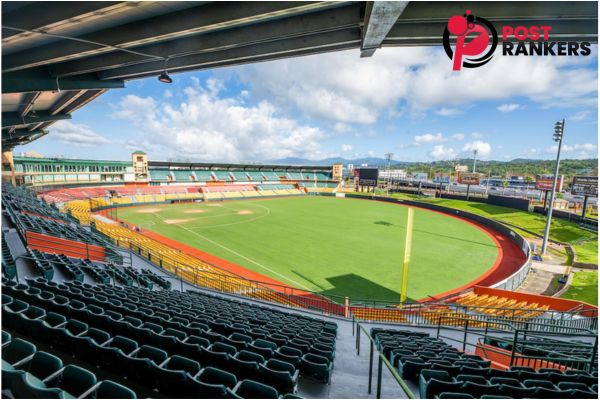
Tucked into the green sprawl of Boston’s Back Bay Fens, Roberto Clemente Field doesn’t look like a place with much history behind it. At first glance, it’s just a well-kept athletic field where students, joggers, and weekend athletes go about their day. Yet the name attached to this small patch of land carries enormous weight, tying a Boston city park to one of baseball’s most beloved figures.
The Story Behind the Name
Roberto Clemente was far more than a star outfielder for the Pittsburgh Pirates. He was, by nearly every account, one of the most complete players of his era, and his impact reached well beyond the diamond. Naming a public field after him wasn’t just a tribute to his stats; it was a way of honoring the values he represented both on and off the field.
Who Was Roberto Clemente?
Clemente built a reputation as one of the finest right fielders the game has ever seen. His combination of skill, consistency, and competitive fire earned him a place among baseball’s all-time greats, and his contemporaries often described him in glowing terms that few players ever receive. Beyond his playing career, though, he became known for something just as important: his humanitarian work.
A Legacy Cut Short
Tragically, Clemente’s life ended far too soon. He died in a plane crash while attempting to deliver relief supplies to earthquake victims in Nicaragua, a mission that perfectly captured who he was as a person. That selfless act, more than any single game or season, cemented his legacy as someone whose character matched his talent. Major League Baseball later created an annual award in his name, recognizing players who combine athletic excellence with genuine community impact.
Roberto Clemente Field in Boston’s Back Bay Fens
While several places across the country carry Clemente’s name, the Boston version sits within one of the city’s most historic green spaces. The Back Bay Fens forms part of the Emerald Necklace, a chain of connected parks designed to weave nature throughout the urban landscape. Roberto Clemente Field occupies a meaningful chunk of that space, blending athletic function with the park’s broader purpose.
A Field With Deep Roots
Long before it carried Clemente’s name, this location served as a public ball field within the Fens. Over the decades, the space evolved alongside the surrounding park, adapting to the needs of nearby schools, colleges, and neighborhood residents. Eventually, the field was officially renamed in Clemente’s honor, transforming a simple neighborhood ballpark into a living tribute.
The Renovation That Changed Everything
For years, though, the field struggled with practical problems that limited how often it could actually be used. New England weather is brutal on outdoor surfaces, and the original track and turf simply couldn’t keep up. Heavy rain, freezing winters, and constant foot traffic left the field in rough shape, making it unreliable for the teams and community members who depended on it.
That changed significantly after a major renovation backed by a local college and a charitable foundation. A multimillion-dollar investment transformed the field into a modern, durable space capable of handling year-round use. A decade later, another substantial grant funded a complete turf replacement and track resurfacing, ensuring the upgrades would hold up for years to come.
Who Uses Roberto Clemente Field Today
What makes Roberto Clemente Field stand out isn’t just its history. It’s how consistently it gets used by such a wide range of people. On any given day, the field might host a college soccer match in the morning, a high school gym class in the afternoon, and a neighborhood softball league by evening.
College Athletics
Several college teams rely on this field as their home base. Soccer, softball, and lacrosse programs all compete here, while track and field athletes use the surrounding all-weather track for practice. For these programs, having a dedicated city field so close to campus is a genuine advantage, especially in a dense urban environment where open space is limited.
High School and Community Use
Beyond college sports, local high schools incorporate the field into their athletic programs and physical education classes. Intramural leagues from nearby colleges also share the space, along with adult and youth softball leagues that run throughout the warmer months. This layered usage turns the field into a true community hub rather than a single-purpose venue.
Open to the Public
Perhaps most importantly, Roberto Clemente Field isn’t locked away for organized sports alone. The track surrounding the field remains open to the public year-round, giving everyday residents a place to walk, jog, or simply get outside. That accessibility reflects the broader spirit of the Back Bay Fens itself, a space designed to serve the public first.
Other Fields That Share the Name
Boston’s field isn’t the only one named after Roberto Clemente, and that’s worth mentioning for anyone researching the name more broadly. Cities across the country have honored him in similar ways, each reflecting local communities’ desire to connect their own public spaces to his legacy.
Fields in Other Cities
In New York City, a recreational ballfield bears his name, offering a smaller-scale tribute within a dense urban park system. Pittsburgh, the city most closely associated with Clemente’s playing career, maintains a memorial park near the Pirates’ home stadium. Other communities, including smaller cities with active youth sports programs, have dedicated their own fields to him as well.
A Shared Theme of Community Impact
Across all these locations, a common thread emerges: these aren’t massive stadiums built for spectacle, but community-focused spaces meant for everyday use. That feels fitting, given how much of Clemente’s own legacy centers on service and connection to ordinary people rather than fame alone.
Why Roberto Clemente Field Matters Beyond Sports
It would be easy to look at Roberto Clemente Field as just another city athletic facility, but that misses the bigger picture. The field represents an intersection of history, community investment, and personal legacy, all wrapped into a relatively modest piece of land.
A Living Tribute
Every time a team takes the field, or a jogger laps the track, they’re interacting with a space named in honor of someone whose impact went far beyond athletics. That kind of everyday connection to history is rare, especially in a city as old and layered as Boston, where most landmarks feel separated from daily life rather than woven into it.
A Model for Public Investment
The renovation story behind Roberto Clemente Field also offers a useful example of how public-private partnerships can revitalize neglected community spaces. Without sustained investment from a local college and a charitable foundation, this field might still be struggling with the same weather-related issues that plagued it for years. Instead, it now stands as proof of what’s possible when institutions commit to shared community resources.
Final Thoughts
Roberto Clemente Field may not draw the same attention as a major league ballpark, but its significance runs deep. From its location within one of Boston’s most historic parks to its role as a hub for college athletics, high school programs, and everyday recreation, this field embodies exactly the kind of community impact Clemente himself was known for. In that sense, the name fits perfectly, not just as a label, but as a reflection of what the space continues to give back to the people who use it.
