

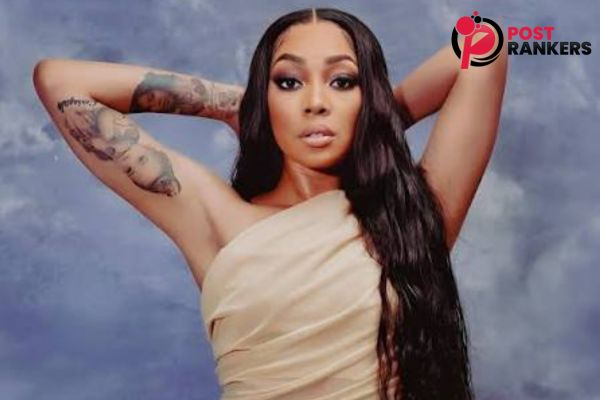
Monica Arnold is an American R&B singer, songwriter, actress, and performer whose remarkable career began when she was still a teenager. Born Monica Denise Arnold on October 24, 1980, in College Park, Georgia, she quickly attracted attention with her rich voice and emotional delivery. Over three decades later, her music, resilience, and influence continue to make her an important figure in contemporary R&B.
Who Is Monica Arnold?
Monica Arnold rose to fame during the 1990s, becoming one of the youngest major voices in R&B. She entered the music business after performing in church and local talent competitions, where her vocal ability attracted professional attention. Her early opportunities eventually led her to producer Dallas Austin and Rowdy Records, setting the stage for her breakthrough debut album and an enduring recording career.
Monica Arnold’s Early Life and Musical Beginnings
Monica grew up in Georgia and discovered her passion for singing at an early age. Gospel music played an important role in her development, particularly through her experiences performing in church. She also participated in talent shows and competitions, which helped build her confidence as a young performer. By her early teens, the music industry had already begun recognizing her exceptional vocal potential.
Her professional breakthrough came after Dallas Austin discovered her talent and helped develop her recording career. Monica signed with Rowdy Records while still very young, eventually releasing her debut album, Miss Thang, in 1995. The project introduced her distinctive voice to a national audience and immediately positioned her among the most promising young R&B performers of her generation.
Monica Arnold’s Breakthrough With Miss Thang
Miss Thang became a major milestone in Monica Arnold’s career. Released when she was only 14, the album produced several successful singles, including “Don’t Take It Personal (Just One of Dem Days)” and “Before You Walk Out of My Life.” Both songs demonstrated her ability to deliver mature emotional performances despite her young age and quickly established her as a serious R&B artist.
The success of Miss Thang also gave Monica a strong foundation for future projects. Rather than relying solely on her youthful appeal, she developed an increasingly confident artistic identity through her songwriting choices, vocal performances, and collaborations. Consequently, her debut became more than a successful introduction; it established a career that would continue evolving as the R&B landscape changed.
The Boy Is Mine and Monica’s Biggest Success
One of Monica Arnold’s most recognizable achievements came in 1998 when she recorded “The Boy Is Mine” with fellow R&B singer Brandy. The duet became one of the defining songs of the late 1990s and turned the two young performers into major pop and R&B stars. Its competitive storyline and memorable vocals helped the single become an international success.
“The Boy Is Mine” earned Monica and Brandy a Grammy Award for Best R&B Performance by a Duo or Group with Vocals. The song also strengthened Monica’s position within mainstream music at a crucial point in her career. Although the collaboration created plenty of public attention around the two singers, its enduring popularity ultimately rested on their contrasting voices and strong individual performances.
Monica Arnold’s Albums and Musical Evolution
Following Miss Thang, Monica continued developing her sound through several successful studio albums. Her discography includes The Boy Is Mine, After the Storm, The Makings of Me, Still Standing, New Life, Code Red, and later projects. Each release reflected different stages of her personal and professional development while maintaining the emotional R&B foundation that defined her career.
Her music often explores relationships, heartbreak, independence, personal growth, and emotional recovery. Songs such as “Angel of Mine,” “So Gone,” and “Why I Love You So Much” became particularly recognizable among R&B listeners. Moreover, Monica has consistently balanced commercial appeal with a vocal style that emphasizes sincerity, controlled power, and emotional storytelling rather than relying entirely on studio effects.
Monica Arnold’s Acting Career
Although music remains Monica Arnold’s primary profession, she has also explored acting throughout her career. Her screen appearances include projects such as Living Single, Boys and Girls, Love Song, ATL, and Pastor Brown. These roles allowed her to demonstrate another dimension of her creativity while expanding her presence beyond the recording studio.
Monica’s acting work also fits naturally with her musical background because many of her performances depend on emotional communication. She has appeared in both television and film productions, giving fans opportunities to see her in scripted roles rather than solely as a recording artist. While acting has never replaced her music career, it has remained a valuable part of her broader entertainment profile.
Monica Arnold’s Family and Personal Life
Monica Arnold is also known for being a mother of three children. She has two sons, Rodney and Romelo, and a daughter named Laiyah. Her family life has often remained an important part of her public story, particularly as she has discussed balancing motherhood with the demands of touring, recording, and maintaining a long-running entertainment career.
Monica was previously married to former NBA player Shannon Brown. The couple married in 2010 and later divorced in 2019. Their daughter, Laiyah, was born during their marriage. Monica has generally approached her personal life with a degree of privacy, although aspects of motherhood and family have naturally influenced her public image and artistic journey.
Monica Arnold’s Influence on R&B
Monica Arnold holds a distinctive place in R&B history because she achieved mainstream success at an unusually young age and maintained relevance for decades. Her career spans several major changes in popular music, from the peak of 1990s urban radio to the digital streaming era. Through those transitions, she has continued performing and connecting with audiences who appreciate traditional R&B vocals.
Her influence also comes from her longevity. Many artists who become successful as teenagers struggle to maintain momentum as their audience changes. Monica instead matured alongside her listeners, allowing her music to address different stages of adulthood. Her ability to combine vulnerability with vocal strength helped establish a recognizable style that continues to influence conversations about female R&B performers.
Monica Arnold’s Voice and Musical Style
Monica’s vocal identity remains one of her greatest strengths. Her voice carries a warm, expressive quality that allows her to move comfortably between intimate ballads and stronger uptempo arrangements. She developed her technique through gospel influences, R&B traditions, and years of professional performance, creating a sound that emphasizes emotional clarity and confident phrasing.
Unlike artists who depend heavily on vocal theatrics, Monica often lets the emotion of a song guide her delivery. That approach has helped her recordings remain relatable across different generations. Her performances can sound powerful without losing their conversational quality, which explains why many of her best-known songs continue appearing on R&B playlists and retrospective discussions about influential female vocalists.
Monica Arnold’s Career Beyond the 1990s
Monica’s career did not end with the popularity of 1990s R&B. Instead, she continued releasing music, performing live, collaborating with other artists, and exploring new creative opportunities. Her later albums showed an artist willing to reflect on adulthood, relationships, motherhood, faith, and personal experiences rather than simply recreating the sound that first made her famous.
Her 2020 Verzuz appearance with Brandy provided another major moment for longtime fans. The event allowed both singers to revisit their catalogs while discussing their careers and musical histories. For Monica, the reunion demonstrated the lasting importance of her earlier work and introduced aspects of her personality and career journey to a new generation of listeners.
Why Monica Arnold Still Matters Today
Monica Arnold remains relevant because her career represents more than a collection of successful songs. She entered the entertainment industry as a child, achieved major recognition as a teenager, experienced personal and professional challenges, and continued building her identity as an adult artist. That long journey gives her story unusual depth within modern R&B.
Her influence is especially clear when considering the generations of female singers who followed her. Monica helped prove that a young R&B vocalist could achieve mainstream success while maintaining a strong connection to emotional storytelling. Furthermore, her willingness to evolve without abandoning her musical roots has allowed her to remain recognizable even as trends, technology, and audience expectations have changed.
Monica Arnold’s Lasting Legacy
When examining Monica Arnold’s career, her achievements extend well beyond individual chart successes. She helped define an important period in R&B while creating songs that remain familiar to listeners decades after their original release. Her Grammy-winning collaboration with Brandy, acclaimed albums, memorable performances, and long-standing connection with fans have secured her place in popular music history.
Monica also represents the value of artistic endurance. She successfully moved from teenage stardom into adulthood without allowing early fame to become the only defining chapter of her story. Through music, acting, motherhood, and personal growth, she has continued shaping a career that reflects both her professional discipline and her willingness to evolve.
Conclusion
Monica Arnold has built an extraordinary R&B career that began with gospel roots and teenage talent before developing into decades of influential music. From Miss Thang and “The Boy Is Mine” to later albums and performances, she has consistently demonstrated vocal strength and emotional authenticity. Her story ultimately reflects longevity, resilience, and an enduring ability to connect with listeners across generations.
