

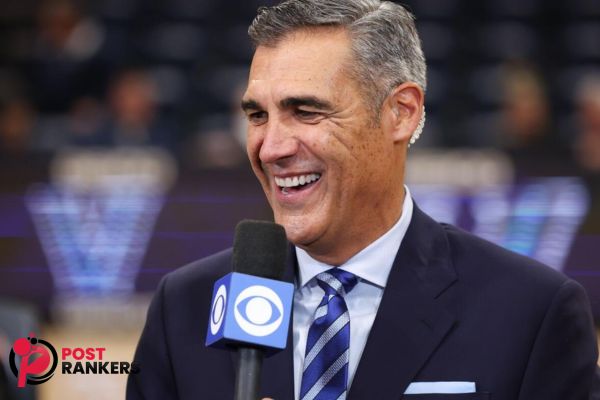
Some coaches win championships. Others build cultures that outlast their own careers. Jay Wright managed to do both, and that’s exactly why his name still commands so much respect across college basketball. During his 21 seasons leading Villanova University, he didn’t just chase trophies; he built a program defined by discipline, humility, and genuine care for the people wearing the jersey.
What makes Jay Wright’s story so compelling isn’t only the championships, although there were plenty of those. It’s the way he approached the entire journey, from his early coaching days to his eventual induction into the Naismith Memorial Basketball Hall of Fame. His path offers a masterclass in patience, consistency, and leadership that extends well beyond the basketball court.
Who Is Jay Wright?
Jerold Taylor “Jay” Wright Jr. was born on December 24, 1961, and he grew up in the suburbs of Philadelphia, a city where basketball runs deep in the local culture. As a young boy, Jay Wright fell in love with the sport while watching the legendary Big Five rivalries at the Palestra, featuring schools like Temple, La Salle, Penn, and St. Joseph’s. That early exposure planted the seeds for a career that would eventually reshape one of those very programs.
Before becoming a coach, Wright played basketball for four years at Bucknell University, graduating in 1983. Although his playing career didn’t launch him into stardom, it gave him a foundational understanding of the game that would later prove invaluable. From there, he transitioned into coaching, starting as an assistant at the University of Rochester before moving on to Drexel University, slowly building the résumé that would eventually define his legacy.
The Road to Villanova
In 1987, Jay Wright’s career took a defining turn when he returned to Villanova, the very program he had grown up admiring, this time as an assistant coach under Hall of Fame coach Rollie Massimino. Working under Massimino gave him a front-row education in high-level coaching, and the two developed a lifelong friendship that extended beyond their five years together at Villanova. Their partnership later continued at UNLV, where Wright followed Massimino for another coaching stint.
Eventually, Wright was ready to lead his own program. He landed his first head coaching position at Hofstra University in 1994, a role he held until 2001. During those seven seasons, he guided Hofstra to multiple America East Conference titles and two NCAA tournament appearances. Although Hofstra wasn’t a basketball powerhouse, Wright’s success there proved he had what it took to lead a program independently.
Returning Home to Lead the Wildcats
When Villanova came calling again in 2001, this time as head coach, Jay Wright accepted the opportunity to lead the program he had once served as an assistant. Nobody could have predicted just how transformative that decision would become. Over the next 21 seasons, Wright turned Villanova into one of the most respected programs in college basketball, blending consistent success with a reputation for developing well-rounded student-athletes.
His early years weren’t without challenges. The 2007–08 season, for example, included a difficult five-game losing streak. Even so, Wright’s team rebounded strongly, earning an NCAA tournament bid and advancing to the Sweet 16. That resilience became a defining trait of his coaching style; setbacks rarely derailed his long-term vision for the program.
Championship Success and National Recognition
Jay Wright’s coaching career reached its highest peak between 2016 and 2018, a stretch that cemented his legacy among college basketball’s elite. Villanova captured NCAA national championships in both 2016 and 2018, while also reaching the Final Four in 2009 and again in 2022. Across those years, the Wildcats consistently ranked among the nation’s most dominant teams, winning games at a pace few programs could match.
Beyond championships, Wright earned individual recognition that further validated his coaching brilliance. He won the Naismith National Coach of the Year award twice, in 2006 and 2016, and became the first coach in Big East history to be named the conference’s Coach of the Year six times. In 2018, he also received the prestigious John R. Wooden Legends of Coaching Award, an honor reserved for coaches who exemplify excellence both on and off the court.
A Program Built on More Than Basketball
What truly separated Jay Wright from many of his coaching peers was his emphasis on academics and personal development. Since 2012, Villanova players have received Academic All-Big East recognition on numerous occasions, and remarkably, every Villanova player who spent four years in the program since 1975 has earned his degree. That statistic speaks volumes about the culture Wright cultivated, one where basketball success never overshadowed personal growth.
Additionally, Wright authored a New York Times bestselling book titled “Attitude: Develop a Winning Mindset On and Off the Court,” published in 2017. The book reflects his broader coaching philosophy, one centered on mindset, discipline, and character rather than talent alone. For Wright, basketball always served as a vehicle for teaching life lessons that extended far beyond the final score.
Life Beyond the Sidelines
In April 2022, Jay Wright announced his retirement as Villanova’s head basketball coach, transitioning into a new role as Special Assistant to the President at the university. Rather than stepping away entirely, he chose to remain connected to the institution that had shaped so much of his career. His successor, Kyle Neptune, had been part of Wright’s coaching staff for a decade, ensuring continuity within the program’s culture and values.
Wright’s personal life reflects the same steadiness that defined his coaching career. He is married to Patricia Reilly, and together they have two sons, Taylor and Colin, along with a daughter named Reilly. In April 2017, Jay and Patty Wright were honored with the inaugural Saint Augustine Medal, a recognition that highlighted their contributions extending well beyond athletics.
Continued Influence on the Game
Even after stepping away from coaching, Jay Wright’s influence remains visible throughout college and professional basketball. Former players, including NBA standouts like Josh Hart, continue to publicly credit him for shaping their development, both as players and as individuals. These lasting relationships highlight just how deeply Wright invested in the people he coached, rather than simply focusing on wins and losses.
His legacy also lives on through Villanova’s continued success and the coaching tree he helped cultivate. Many assistants who worked under him have gone on to lead their own programs, carrying forward the values and strategies Wright instilled during his tenure. That ripple effect ensures his impact on basketball will continue well beyond his own coaching career.
Final Thoughts
Jay Wright’s journey from a basketball-obsessed kid in Philadelphia to a Hall of Fame coach reflects decades of patience, resilience, and genuine leadership. His two national championships and numerous accolades tell only part of the story; the culture he built at Villanova, rooted in academics, character, and long-term relationships, tells the rest. Few coaches manage to leave behind both championship banners and a legacy of mentorship, but Jay Wright accomplished exactly that.
