

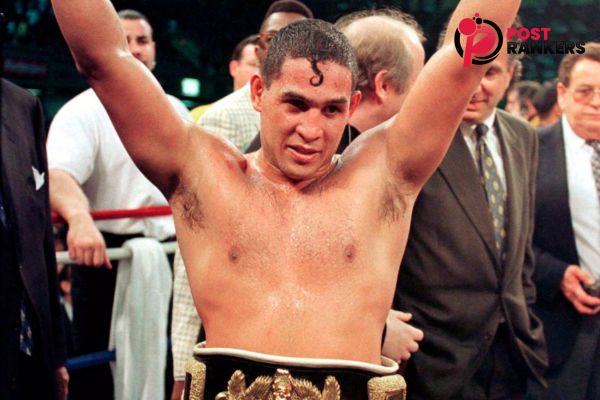
Hector Camacho was one of boxing’s most unforgettable personalities, combining elite hand speed, slick defensive movement, championship success, and a flamboyant style that made him impossible to ignore. Known worldwide as “Macho” Camacho, the Puerto Rican fighter became a major star during the 1980s and 1990s. His career included victories over respected champions, three-division world titles, and a legacy that remains deeply connected to boxing history.
Who Was Hector Camacho?
Hector Camacho was a Puerto Rican professional boxer who competed at the highest level for more than three decades. Born Héctor Luís Camacho Matías on May 24, 1962, in Bayamón, Puerto Rico, he later grew up in New York City and developed his boxing skills in Spanish Harlem. His speed, confidence, and natural athletic ability quickly made him a standout young fighter.
Camacho turned professional in 1980 and immediately began building a reputation as an exciting, unconventional talent. Unlike many fighters who relied mainly on power, he used quick combinations, sharp footwork, reflexes, and defensive movement to control opponents. Meanwhile, his colorful personality and extravagant ring entrances helped him become a crossover sports celebrity.
Hector Camacho’s Early Life and Boxing Background
Camacho spent much of his childhood in New York City, where boxing offered both structure and opportunity. He entered the amateur ranks and quickly established himself as a talented competitor. His success in the New York Golden Gloves helped develop the confidence and technical foundation that later supported his professional career.
As an amateur, Camacho gained valuable experience against strong competition before entering professional boxing. His southpaw stance, fast hands, and unusual movement made him difficult to read. Consequently, he entered the professional ranks with the tools necessary to become more than an ordinary prospect.
The Rise of “Macho” Camacho
The nickname “Macho” perfectly matched Camacho’s public image. He embraced confidence, fashion, entertainment, and spectacle in a way that few boxers had done before him. His flamboyant outfits and dramatic entrances became part of the experience, while his performances inside the ring gave fans a genuine athletic reason to keep watching.
However, the showmanship never completely overshadowed his boxing ability. Camacho possessed exceptional speed and could throw combinations rapidly from unusual angles. His defensive instincts allowed him to avoid many clean punches, while his movement created constant problems for opponents who struggled to establish their rhythm.
Hector Camacho’s Championship Career
Hector Camacho became a world champion in three weight divisions, an achievement that confirmed his status as one of the most accomplished fighters of his generation. He won the WBC super featherweight title, later captured the WBC lightweight championship, and eventually secured a world title at junior welterweight.
His championship success reflected both his adaptability and his longevity. Camacho competed across different weight classes and faced opponents with varying styles, physical strengths, and tactical approaches. Therefore, his career cannot be judged only by his personality or famous entrances; his championship record demonstrates genuine elite-level ability.
Winning the WBC Super Featherweight Title
Camacho captured his first major world championship at super featherweight in 1983. At that stage, he had already developed a reputation as one of boxing’s fastest and most entertaining young fighters. The title victory confirmed that his speed and movement could succeed against experienced world-class competition.
The achievement also established the foundation for his larger career. Rather than remaining at one weight for his entire professional journey, Camacho continued seeking major opportunities in heavier divisions. His willingness to challenge himself helped him remain relevant as boxing’s competitive landscape changed.
Success at Lightweight and Junior Welterweight
Camacho later won the WBC lightweight championship, adding another major title to his résumé. His ability to compete successfully at a heavier weight demonstrated the versatility that became a defining feature of his career. He continued relying on speed and technical movement while adapting to opponents who often possessed greater physical strength.
He eventually captured a world championship at junior welterweight as well. By winning titles across three divisions, Camacho joined an exclusive group of fighters whose careers extended successfully beyond a single weight class. His achievements gave substance to the larger-than-life image he presented outside the ring.
Hector Camacho’s Biggest Fights
Throughout his career, Hector Camacho shared the ring with several major names from boxing’s golden era. His opponents included Roberto Durán, Sugar Ray Leonard, Julio César Chávez, Félix Trinidad, and Oscar De La Hoya. These matchups placed him directly against some of the most recognizable fighters in modern boxing history.
One of his most significant victories came against Roberto Durán, a legendary champion known for his toughness and technical skill. Camacho used his speed and movement effectively during the bout, demonstrating how his athletic style could neutralize a dangerous and experienced opponent.
The Sugar Ray Leonard Fight
Camacho also faced Sugar Ray Leonard in 1997, a bout that became especially significant because it marked Leonard’s final professional fight. Camacho won the contest by technical knockout, adding another famous name to his record and ending one of boxing’s most celebrated careers.
Although the fight occurred later in both men’s careers, it still carried enormous historical importance. Leonard had already established himself as an all-time great, while Camacho remained one of boxing’s most recognizable personalities. Their meeting therefore became an important chapter in the story of both fighters.
Battles Against Chávez and De La Hoya
Camacho also faced Julio César Chávez and Oscar De La Hoya, two opponents who represented different stages of boxing’s elite competition. His fight with Chávez ended in a defeat, while De La Hoya also defeated him during a later period of Camacho’s career.
These losses did not erase his earlier accomplishments. Instead, they showed the difficult level of competition Camacho continued to face throughout his career. He remained willing to compete against elite names, even as the sport changed and younger stars began emerging.
A Boxing Style Built on Speed
Hector Camacho’s fighting style centered on speed, movement, and defensive awareness. His hands moved quickly, allowing him to deliver combinations before opponents could respond. He also used his feet effectively, creating angles and distance that made it difficult for opponents to land clean punches.
Camacho did not always pursue the kind of aggressive exchanges that produce dramatic knockouts. Instead, he often relied on timing and precision. His approach required excellent reflexes and coordination, especially against opponents who tried to pressure him and force close-range exchanges.
Why His Style Was So Difficult to Fight
Opponents often struggled because Camacho rarely stood still for long. He could move laterally, change angles, and launch quick combinations before quickly repositioning himself. As a result, fighters who preferred a straightforward exchange often found it difficult to establish consistent offensive pressure.
His southpaw stance added another tactical challenge. Southpaw fighters can create awkward angles for orthodox opponents, particularly when they possess strong footwork and fast hands. Camacho understood how to use those advantages, making his style both entertaining and technically effective.
The Showman Behind the Gloves
Outside the ring, Camacho became almost as famous for his personality as he was for his boxing. His ring entrances featured elaborate costumes, theatrical gestures, and an unmistakable sense of confidence. He understood that professional boxing involved entertainment as well as athletic competition.
That approach made him a natural television personality. Fans knew they would receive more than a standard walk to the ring when Camacho fought. His entrances created anticipation, while his bold interviews and outspoken personality ensured that he remained part of the conversation before and after his bouts.
Hector Camacho’s Influence on Boxing Entertainment
Camacho helped establish a model for fighters who treated personal branding as an important part of professional boxing. He understood how to create a recognizable identity and use charisma to attract attention. Later generations of fighters adopted similar approaches, combining athletic performance with fashion, personality, music, and carefully developed public images.
Nevertheless, Camacho’s influence came from more than his flamboyance. He possessed the boxing talent necessary to support the spectacle. Without his speed, championship victories, and major opponents, the “Macho” persona would not have carried the same lasting impact.
Personal Struggles and Later Years
Like many public figures, Camacho experienced serious challenges outside the ring during the later stages of his life. His personal struggles included legal problems and substance abuse issues, which affected his public image and personal circumstances. These difficulties became part of the complicated story surrounding a fighter who had once enjoyed enormous fame.
Despite those struggles, Camacho remained an important figure in Puerto Rican boxing. His career had already secured his place in the sport’s history, and fans continued to remember his achievements. His life also demonstrated how difficult it can be for athletes to manage fame, personal challenges, and life after peak competition.
Hector Camacho’s Death and Legacy
Hector Camacho died on November 24, 2012, at the age of 50, after suffering injuries in a shooting in Bayamón, Puerto Rico. His death shocked the boxing world and led to widespread mourning among fans, fighters, and members of Puerto Rico’s sporting community.
His legacy remains complex but significant. Camacho was a three-division world champion, a technically gifted southpaw, and one of boxing’s most recognizable entertainers. He competed against legendary names and created a distinctive identity that few fighters have matched. His career continues to attract attention because it combined athletic brilliance with extraordinary personality.
Final Thoughts on Hector Camacho
Hector Camacho remains one of boxing’s most unforgettable figures because he successfully combined championship-level talent with a personality larger than the sport itself. His speed, footwork, defensive ability, and three-division title achievements established his credentials, while his theatrical entrances and “Macho” persona made him a cultural icon.
Ultimately, Hector Camacho’s story includes triumph, controversy, personal struggle, and lasting influence. He entertained millions, challenged some of boxing’s greatest names, and helped redefine what a modern boxing star could look like. Years after his death, his legacy continues through the memories of fans who remember both the brilliant fighter and the unforgettable showman.
