

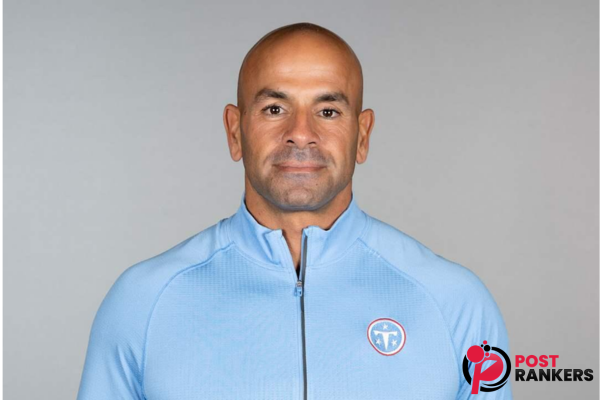
Robert Saleh’s name has become one of the most talked-about in professional football, and for good reason. After a rocky stint in New York and a redemptive return to San Francisco, he’s now leading the Tennessee Titans as their head coach heading into the 2026 season. His path to this point wasn’t the typical résumé of a lifelong football lifer, though. It’s a story built on a career pivot, a family tragedy that changed everything, and a stubborn refusal to settle for comfortable.
Who Is Robert Saleh?
Born on January 31, 1979, in Dearborn, Michigan, Robert Saleh grew up in a tight-knit Lebanese American household where football wasn’t just a game it was a family language. His father, Sam, had once played linebacker at Eastern Michigan and even earned a tryout with the Chicago Bears before a knee injury ended that dream. Sam eventually walked away from coaching too, choosing construction work to provide for his family instead. That unfulfilled ambition would echo through his son’s life in ways nobody expected.
Robert followed in his father’s footsteps athletically, becoming a four-year starter at tight end for Northern Michigan University. However, unlike his dad, he didn’t chase the NFL after graduation. Instead, he took a steady, respectable path: a finance degree and a job at Comerica Bank, evaluating loan applications for roughly $800 a week. On paper, it looked like the smart move. In reality, something was missing, even if Saleh couldn’t quite name it yet.
The Turning Point: September 11, 2001
Everything changed on a single morning in 2001. Saleh’s older brother, David, was working on the 61st floor of the South Tower at the World Trade Center when the first plane struck the North Tower. David made it down to the 24th floor before the second plane hit his own building, and he eventually escaped to safety. For the Saleh family, watching the tragedy unfold on television was a gut-wrenching experience that reframed everything they thought mattered.
That day pushed Robert to stop settling for “safe.” He quit his banking job just months later and dove headfirst into coaching, starting as a graduate assistant at Michigan State while earning his master’s degree in kinesiology. From there, he moved to Central Michigan under head coach Brian Kelly, a connection that would open doors throughout his career. It was a leap of faith, and honestly, it’s the kind of decision that makes his current success feel earned rather than handed to him.
Building a Coaching Résumé From the Ground Up
Saleh’s rise through the coaching ranks wasn’t fast or flashy. He spent six seasons with the Houston Texans starting in 2005, working his way up from quality control coach to assistant linebackers coach. Then came three years with the Seattle Seahawks under Pete Carroll, where he was part of the legendary “Legion of Boom” defense that helped Seattle win Super Bowl XLVIII in 2013. That ring gave him instant credibility, even though his role at the time was still relatively behind the scenes.
From Seattle, Saleh landed the linebackers coach job with the Jacksonville Jaguars in 2014. But when head coach Gus Bradley was let go in 2016, Saleh wasn’t retained by the incoming staff. Rather than viewing it as a setback, he treated it as a stepping stone. In February 2017, Kyle Shanahan — a former colleague from his Texans days — hired him as defensive coordinator for the San Francisco 49ers, a role that would define the next phase of his career.
The 49ers Years and a Super Bowl Run
Saleh’s defense with the 49ers became one of the most respected units in the league. During the 2019 season, San Francisco ranked in the top ten in both scoring and total yards allowed for the first time since 2003. That dominant defense helped carry the 49ers to Super Bowl LIV, where they ultimately fell to the Kansas City Chiefs. Even in defeat, though, Saleh had proven he could build and run a championship-caliber unit, and league-wide interest in him as a head coaching candidate started heating up.
That interest paid off in January 2021, when the New York Jets hired Saleh as their head coach on a five-year contract. It was his first shot at running an entire organization, not just a defense, and expectations were sky-high given his pedigree.
The Jets Chapter: Promise and Frustration
Unfortunately, Saleh’s tenure in New York never quite clicked the way everyone hoped. The Jets missed the playoffs during his first two seasons, and the acquisition of Aaron Rodgers in 2023 was supposed to be the turning point. Instead, Rodgers tore his Achilles just four snaps into the season opener, derailing the entire campaign before it really began. New York finished 7-10 that year, and the pressure on Saleh only intensified.
The following season, even with Rodgers back and healthy, the Jets stumbled out of the gate. Saleh was fired just five games in, finishing his New York run with a 20-36 overall record. It was a tough ending, no doubt, but rather than fade from the coaching landscape, he used the experience as a lesson in connecting more genuinely with an entire roster — not just the defensive side of the ball.
Back to San Francisco, Then Nashville
Robert Saleh returned to the 49ers as defensive coordinator in 2025, working once again alongside Kyle Shanahan. Despite a roster ravaged by injuries including season-ending losses for stars Nick Bosa and Fred Warner San Francisco still managed a 12-5 record and a trip to the Divisional Round. That performance reminded the league exactly why Saleh had been considered such a hot commodity in the first place.
Then, in January 2026, the Tennessee Titans came calling. After firing Brian Callahan mid-season and finishing a dismal 3-14, Tennessee needed a steady hand and a proven defensive mind to rebuild around young quarterback Cam Ward. Saleh impressed general manager Mike Borgonzi and the search committee enough during an in-person meeting to seal a five-year deal, officially becoming the 22nd head coach in franchise history.
What’s Next for Robert Saleh in Tennessee?
Robert Saleh now faces the challenge of turning around a team that averaged just 16.7 points per game last season. His first major task will be assembling an offensive coaching staff capable of developing Cam Ward into a franchise quarterback, since Saleh’s own background leans heavily defensive. Given his track record of building elite units and mentoring rising talent, though, Titans fans have every reason to feel cautiously optimistic.
Off the field, Saleh remains deeply devoted to his family. He and his wife, Sanaa, are raising eight children together, and he often credits his father’s unfulfilled coaching dreams as the quiet motivation behind his own relentless drive. As the NFL’s first Muslim American head coach, he also carries a sense of responsibility toward representation in a league that hasn’t always reflected the diversity of its fanbase.
Final Thoughts
Robert Saleh’s career is proof that the most compelling coaching stories aren’t always about uninterrupted success. They’re about resilience after setbacks, honest self-reflection, and the willingness to start over when it matters most. Whether he can finally deliver a winning culture in Nashville remains to be seen, but given everything he’s overcome to get here, betting against him would be a mistake.
