

Table of Contents
ToggleIntroduction to Coolidge, Arizona
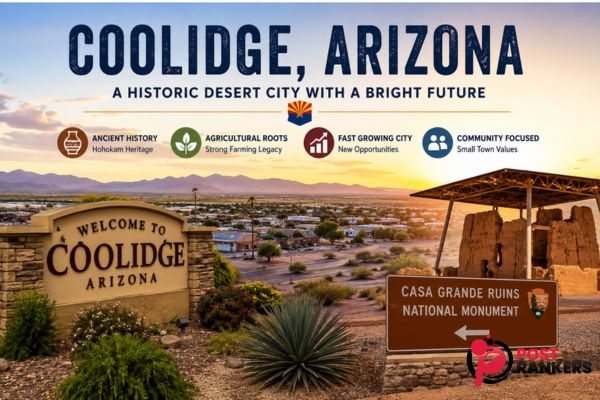
Coolidge, Arizona is a small yet steadily expanding city located in the heart of Pinal County, positioned between the major metropolitan areas of Phoenix and Tucson. Although it may appear quiet at first glance, the city carries a rich blend of ancient history, agricultural strength, and modern development that continues to shape its identity today. Moreover, Coolidge attracts attention for its unique balance of desert charm and practical living opportunities, making it a notable place within central Arizona.
At the same time, Coolidge, Arizona offers a lifestyle that feels slower and more grounded compared to larger cities nearby. However, its strategic location and ongoing development projects have started to change that perception. As a result, the city is gradually becoming an attractive destination for families, workers, and travelers who appreciate both historical depth and emerging economic potential in one place.
History and Origins of Coolidge, Arizona
Ancient Hohokam Civilization
The history of Coolidge, Arizona begins long before modern settlement, as the region was originally inhabited by the Hohokam people over 1,000 years ago. These early Native American communities developed highly advanced irrigation systems that allowed agriculture to thrive in the harsh desert environment. Consequently, their engineering and farming techniques remain one of the most impressive achievements of ancient North American civilizations.
In addition, archaeological evidence still exists today, showcasing the remarkable skill and organization of the Hohokam society. Their legacy continues to influence how historians and visitors understand the region’s deep cultural significance. Therefore, Coolidge is not just a modern town but also a gateway to one of the most fascinating ancient histories in the United States.
Modern Founding and Development
Modern Coolidge, Arizona was officially established in 1925 and later incorporated in 1945. The city was named after President Calvin Coolidge, reflecting the period’s national influence on local development. Initially, the area grew slowly, relying heavily on agriculture and irrigation projects that transformed the desert into productive farmland. However, over time, improved infrastructure encouraged steady population growth and economic expansion.
Furthermore, the construction of nearby irrigation systems and transportation routes helped position Coolidge as a small but important hub within Pinal County. As a result, the city gradually evolved from a farming settlement into a structured community with schools, businesses, and public services that support its residents today.
Geography and Climate of Coolidge, Arizona
Coolidge, Arizona is situated within the Sonoran Desert, a region known for its dramatic landscapes, dry conditions, and striking natural beauty. The city experiences a classic desert climate, which includes extremely hot summers and mild, comfortable winters. Because of this, residents adapt their daily routines around seasonal temperature changes, especially during peak summer months when heat levels rise significantly.
Moreover, the geography surrounding Coolidge features wide open spaces, desert vegetation, and distant mountain views that define its scenic environment. Although rainfall is limited throughout the year, occasional monsoon storms bring brief but intense weather changes. Consequently, the climate plays a major role in shaping both lifestyle and agricultural practices in the region, making adaptation an essential part of living in Coolidge.
Economy and Growth in Coolidge, Arizona
Agricultural Strength and Farming Heritage
Agriculture remains one of the strongest pillars of Coolidge, Arizona’s economy. The region’s fertile desert soil, combined with irrigation systems, supports the cultivation of crops such as cotton and other desert-adapted produce. Historically, farming shaped the city’s early development, and even today it continues to contribute significantly to local employment and economic stability.
In addition, many families in the area have long-standing ties to agricultural work, which reinforces the community’s connection to the land. Although modern industries are emerging, agriculture still represents a vital part of Coolidge’s identity. Therefore, the city maintains a strong balance between traditional farming practices and new economic opportunities.
Industrial Expansion and Modern Development
In recent years, Coolidge, Arizona has experienced noticeable industrial and technological growth. New manufacturing facilities and logistics operations have begun to establish themselves in the region, bringing additional job opportunities and economic diversification. For instance, clean energy and transportation-related projects have introduced innovative industries into the local economy.
Furthermore, improved infrastructure and regional connectivity have made Coolidge more attractive for business development. As a result, the city is slowly transforming into a mixed-economy hub where agriculture, manufacturing, and services coexist. This shift not only strengthens the local economy but also increases long-term stability for residents.
Lifestyle and Living in Coolidge, Arizona
Life in Coolidge, Arizona offers a relaxed and community-focused atmosphere that appeals to those seeking a quieter environment away from major urban congestion. Residents often enjoy lower traffic levels, open spaces, and a strong sense of neighborhood connection. However, the city still provides essential services such as schools, healthcare facilities, and local businesses that support everyday living.
Additionally, the cost of living in Coolidge tends to be more affordable compared to larger Arizona cities. This affordability attracts families and individuals looking for practical housing options without sacrificing access to nearby metropolitan areas. Consequently, many people choose Coolidge for its balance between simplicity, convenience, and long-term livability.
Attractions and Nearby Highlights of Coolidge, Arizona
Casa Grande Ruins National Monument
One of the most important attractions near Coolidge, Arizona is the Casa Grande Ruins National Monument, a preserved ancient structure built by the Hohokam civilization. This historical site provides a rare glimpse into early Native American engineering and architectural skill. As a result, it draws visitors from across the country who are interested in archaeology and cultural history.
Moreover, the monument stands as a powerful reminder of the region’s deep past, connecting modern residents with ancient traditions. Visitors often describe the site as both educational and inspiring, especially because it highlights how early societies adapted to desert living. Therefore, it remains a central point of interest for anyone exploring the Coolidge area.
Education and Infrastructure in Coolidge, Arizona
Education plays an important role in the development of Coolidge, Arizona, with several schools and institutions serving the local community. The presence of the Central Arizona College campus nearby further enhances educational opportunities for students pursuing higher education or vocational training. Consequently, residents have access to both foundational learning and advanced academic pathways.
In addition, infrastructure in Coolidge continues to improve as the city grows. Roads, public services, and utilities are gradually expanding to accommodate population increases and economic development. Although still smaller than nearby urban centers, Coolidge is steadily modernizing, ensuring that residents benefit from improved connectivity and essential services that support long-term growth.
Conclusion: Why Coolidge, Arizona Continues to Grow
Coolidge, Arizona represents a unique blend of ancient history, agricultural heritage, and modern progress that continues to shape its identity. While it remains a smaller city, its strategic location and ongoing development make it increasingly relevant within central Arizona’s growth corridor. Moreover, its deep cultural roots and strong community values provide a sense of stability that many growing areas often lack.
Ultimately, Coolidge stands out as more than just a desert town. Instead, it reflects a living timeline where history and progress coexist. As development continues and opportunities expand, Coolidge, Arizona is likely to gain even more attention as a practical, affordable, and historically rich place to live and visit in the years ahead.
