

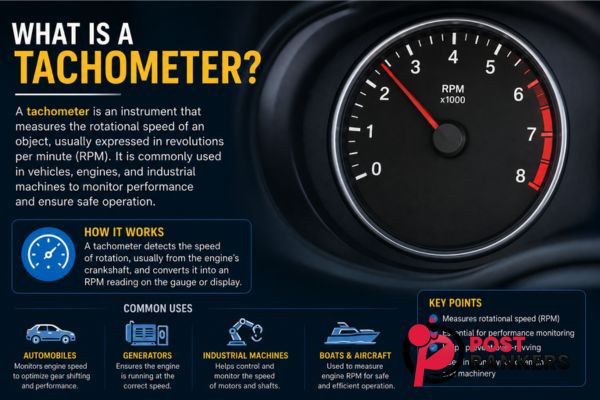
What Is a Tachometer?
A tachometer is one of the most important instruments found in vehicles, industrial machinery, and various mechanical systems. It measures the rotational speed of an engine, motor, or rotating component and displays the result in revolutions per minute, commonly known as RPM. Although many drivers see a tachometer every day on their dashboard, not everyone understands its purpose or how valuable it can be.
In modern vehicles, the tachometer provides real-time information about engine speed, helping drivers operate their cars more efficiently. Meanwhile, in industrial settings, technicians rely on tachometers to monitor machinery performance and prevent equipment damage. As a result, this simple yet powerful instrument plays a critical role in maintaining both safety and performance.
How Does a Tachometer Work?
The Basic Operating Principle
A tachometer works by detecting the rotational speed of an engine or mechanical component and converting that information into a readable RPM value. Depending on the design, the device may use mechanical connections, electrical signals, magnetic sensors, or optical technology to measure rotation accurately.
When the engine spins, sensors collect data about its speed and send that information to the tachometer. The instrument then calculates the RPM and displays it through either an analog needle or a digital screen. Consequently, users can instantly monitor how fast the engine or machine is operating.
Why RPM Matters
RPM serves as a direct indicator of engine workload and performance. Low RPM levels generally indicate light engine activity, while higher RPM levels suggest increased power output. Therefore, understanding RPM helps drivers and operators make informed decisions about gear changes, fuel efficiency, and overall equipment operation.
Excessively high RPM levels can cause unnecessary wear and stress on mechanical components. On the other hand, running an engine at extremely low RPM under heavy load may also reduce efficiency and performance. The tachometer helps maintain the ideal balance.
The History of the Tachometer
Early Mechanical Designs
The earliest tachometers appeared during the Industrial Revolution when engineers needed a reliable method to monitor rotating machinery. These devices used mechanical cables and gears connected directly to the rotating shaft. As the shaft turned, the mechanism moved a needle that indicated speed on a calibrated dial.
Although these early systems were effective for their time, they required regular maintenance and were less accurate than modern alternatives. Nevertheless, they laid the foundation for the advanced tachometers used today.
Evolution into Electronic Technology
As electronics became more sophisticated, manufacturers introduced electronic tachometers that relied on sensors and electrical signals rather than mechanical connections. This advancement improved accuracy, reliability, and response time.
Today, digital technology has taken tachometer performance even further. Modern systems provide highly precise RPM readings while integrating seamlessly with vehicle computers and industrial monitoring equipment.
Types of Tachometers
Mechanical Tachometers
Mechanical tachometers use a rotating cable connected directly to an engine or machine. The cable transfers rotational motion to the gauge, which then displays the speed.
These devices remain popular in certain classic vehicles and older machinery because of their simple construction. However, they generally require more maintenance than electronic versions and may lose accuracy over time.
Electronic Tachometers
Electronic tachometers have become the industry standard across most applications. They receive electrical signals from sensors positioned near rotating components and calculate RPM electronically.
Because they contain fewer moving parts, electronic tachometers typically offer greater accuracy and durability. Furthermore, they can respond more quickly to speed changes, making them ideal for modern engines and equipment.
Digital Tachometers
Digital tachometers display RPM readings on an electronic screen rather than using a traditional needle gauge. These instruments often provide highly detailed measurements and may include additional features such as data storage and performance tracking.
Many industrial technicians prefer digital tachometers because they allow precise monitoring and analysis. Additionally, digital displays can be easier to read in challenging work environments.
Non-Contact Tachometers
Non-contact tachometers use laser or optical technology to measure rotational speed without physically touching the object being tested. They work by detecting reflective markers attached to the rotating component.
This design makes them particularly useful for measuring the speed of moving parts that may be difficult or unsafe to access directly. Consequently, non-contact tachometers have become valuable tools in manufacturing, maintenance, and engineering applications.
The Role of a Tachometer in Vehicles
Helping Drivers Shift Efficiently
In manual transmission vehicles, the tachometer helps drivers determine the optimal time to shift gears. By monitoring RPM levels, drivers can avoid shifting too early or too late, resulting in smoother acceleration and better fuel economy.
Experienced drivers often rely on the tachometer to keep the engine operating within its most efficient power range. This practice not only improves performance but also reduces long-term engine wear.
Protecting the Engine
Every engine has a maximum safe operating speed. Exceeding this limit can lead to severe mechanical damage. To help prevent this, most tachometers include a redline area that warns drivers when RPM levels approach dangerous territory.
When drivers pay attention to the tachometer, they can avoid over-revving the engine and extend the lifespan of critical components. Therefore, the instrument serves as both a performance guide and a protective tool.
Industrial Applications of Tachometers
Monitoring Machinery Performance
Industrial facilities use tachometers to monitor motors, generators, pumps, conveyor systems, and countless other machines. Accurate RPM measurements help ensure equipment operates within specified parameters.
By tracking rotational speed, technicians can identify potential issues before they become serious problems. Consequently, regular tachometer monitoring contributes to improved productivity and reduced maintenance costs.
Supporting Preventive Maintenance
Preventive maintenance programs often include routine tachometer inspections. Unexpected RPM fluctuations can signal problems such as worn bearings, slipping belts, electrical faults, or mechanical misalignment.
Detecting these issues early allows maintenance teams to address them before major failures occur. As a result, businesses can minimize downtime and avoid costly repairs.
Advantages of Using a Tachometer
Improved Efficiency
A tachometer helps users operate engines and machinery within their optimal performance range. This leads to better fuel economy, reduced energy consumption, and enhanced productivity. Over time, these efficiency gains can generate significant cost savings.
Enhanced Safety
Monitoring RPM levels helps prevent dangerous operating conditions. Whether in a vehicle or an industrial facility, maintaining safe rotational speeds reduces the risk of equipment failure and accidents.
Better Equipment Longevity
Machines that consistently operate within recommended RPM ranges experience less wear and stress. Consequently, components tend to last longer, reducing maintenance expenses and replacement costs.
Common Tachometer Problems
Inaccurate Readings
A faulty sensor, damaged wiring, or calibration issue can cause incorrect RPM readings. When this happens, operators may make decisions based on inaccurate information, potentially affecting performance and safety.
Needle Fluctuation
In analog tachometers, a bouncing or unstable needle often indicates electrical interference or sensor problems. Addressing the issue promptly helps restore accurate measurements.
Complete Failure
Like any instrument, a tachometer can fail due to age, component wear, or electrical damage. Routine inspections and maintenance can help identify problems before total failure occurs.
The Future of Tachometer Technology
Modern it’s continue to evolve alongside advances in automotive and industrial technology. Many newer systems integrate directly with computerized monitoring platforms, providing real-time diagnostics and performance analysis.
As connected vehicles and smart manufacturing become more common, it’s will likely play an even greater role in predictive maintenance and operational efficiency. Their ability to provide accurate speed measurements remains essential in a world increasingly driven by data and automation.
Conclusion
The tachometer may appear to be a simple instrument, but its importance cannot be overstated. From helping drivers optimize vehicle performance to enabling industrial technicians to maintain complex machinery, it serves as a vital tool across countless applications.
By measuring RPM accurately and consistently, a tachometer improves efficiency, enhances safety, and extends equipment life. Whether installed in a sports car, a factory machine, or a power generator, this remarkable device continues to prove its value in modern technology and engineering.
