

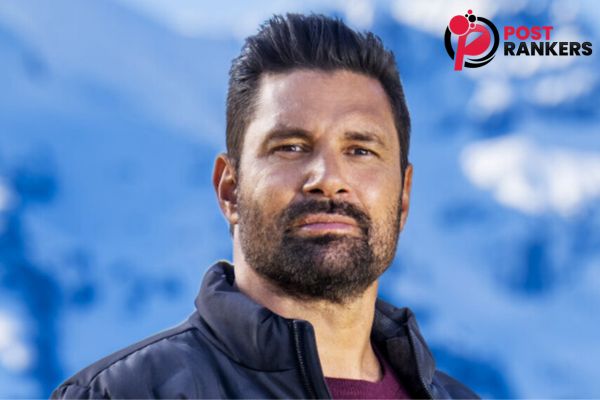
There are actors who land roles, and then there are actors who become the role. Manu Bennett belongs firmly in the second category. Whether he’s roaring as a gladiator in a blood-soaked arena, stalking his prey as a CGI orc warlord, or cloaking himself in the cold menace of a DC supervillain, Bennett brings a rawness to his craft that’s genuinely hard to fake. He’s not just another action star with a chiseled jawline — he’s a storyteller shaped by real loss, real heritage, and real grit.
So who exactly is Manu Bennett, and why does he continue to captivate audiences decades into his career? Let’s dig in.
The Man Behind the Warrior: Early Life and Origins
Manu Bennett was born Jonathan Manu Bennett on October 10, 1969, in Rotorua, New Zealand. His roots run deep — on his father’s side, he carries Māori ancestry from the Te Arawa and Ngāti Kahungunu iwi, a heritage that has quietly shaped both the man and the artist he would become. His father, Ted Bennett, was a singer, and his mother was an Australian bikini model, which meant the entertainment world wasn’t exactly foreign territory growing up.
Shortly after his birth, the family relocated to Australia, where Manu spent most of his formative years in Sydney and Newcastle. He was athletic from a young age — talented enough on the rugby field that a professional career seemed entirely within reach. But life had other plans, and not gentle ones. A devastating car accident in his youth claimed the lives of his mother and brother, a trauma that redirected his entire path. Instead of channeling his energy into sport, he turned to acting and dance as a way to process grief and rebuild himself from the inside out.
From the Rugby Pitch to the Stage
That shift wasn’t impulsive. Bennett threw himself into his craft with the same intensity he’d once applied to rugby. He attended Te Aute College in New Zealand before eventually earning a ballet scholarship to the Lee Strasberg Theatre Institute in New York — the same institution tied to the legendary method acting tradition. Rather than pursuing ballet, he pivoted toward acting at the institute, spending years honing technique before the industry finally took notice.
His professional debut came in 1993 on the Australian teen soap opera Paradise Beach, a modest start by any measure. He followed that with guest appearances on shows like Water Rats, All Saints, and BeastMaster, gradually building a reputation as a reliable, physically commanding presence on screen. It was slow, steady, and honest work — the kind that builds real foundations.
Breaking Through: The Role That Changed Everything
Crixus and the World of Spartacus
If there’s a single turning point in Manu Bennett’s career, it’s the role of Crixus in the Starz series Spartacus, which premiered in 2010. He played Crixus, the Undefeated Gaul — a fierce, proud gladiator whose complex arc from rival to rebel became one of the most compelling character journeys on television at the time. Bennett didn’t just play the part; he owned it completely.
What made his performance especially remarkable was its consistency. When the series lost its lead actor Andy Whitfield to cancer, the entire production faced an emotional and creative crisis. Bennett’s portrayal of Crixus became the emotional spine of the show, carrying it through four seasons — something no other cast member achieved. His gravelly voice, physical presence, and emotional depth turned Crixus from a supporting character into a fan-favorite icon. By the time Spartacus ended in 2013, Manu Bennett was a household name in fantasy and action television.
Azog the Defiler: Becoming the Monster
In 2012, director Peter Jackson came calling, and Manu Bennett stepped into an entirely different kind of role — or rather, stepped out of himself entirely. Through performance-capture technology, he brought Azog the Defiler to life in The Hobbit trilogy, portraying the pale orc warlord with terrifying intensity. Jackson himself reportedly told the press at the World Premiere that Bennett’s was “The Breakout Performance” of the film — high praise from one of cinema’s most exacting directors.
That Bennett managed to deliver a memorable, emotionally resonant villain through layers of CGI says everything about his skill as a performer. He based Azog on a combination of Darth Vader and Jaws, aiming for a predator driven by singular, relentless purpose rather than generic villainy. The result was unforgettable. The Hobbit trilogy went on to gross over $2.9 billion worldwide, and Azog became one of its most talked-about characters.
Deathstroke and the Arrow Era
Slade Wilson Steals the Show
In November 2012 — the same year The Hobbit premiered — Manu Bennett was cast as Slade Wilson in the CW’s Arrow, a role that would introduce him to an entirely new generation of fans. He started as a recurring figure in Season 1, but his performance was strong enough that the producers promoted him to series regular for Season 2. Many DC fans and critics declared his Deathstroke the most compelling villain the show ever produced.
What made his Slade Wilson so effective was the layered backstory Bennett brought to it. Before Slade became the ruthless assassin Deathstroke, he and Oliver Queen were allies on the island of Lian Yu — brothers-in-arms forged by survival. That friendship, and its eventual shattering, gave the rivalry between the two characters genuine emotional stakes. Bennett played both sides of Slade with equal conviction, making the character’s fall into villainy feel tragic rather than cartoonish.
A Villain with Real Emotional Depth
It’s worth noting that playing iconic comic book villains requires more than physical intimidation — it demands psychological authenticity. Bennett understood that. He approached Slade Wilson not as a monster but as a man consumed by grief and betrayal, which is exactly why audiences responded so powerfully. The performance elevated Arrow at a critical moment in its run and cemented Bennett’s place in superhero television history.
Heritage, Identity, and Authentic Storytelling
Embracing His Māori Roots
In recent years, Manu Bennett has made a deliberate shift toward projects that reflect his cultural identity. In 2022, he starred in Muru, a New Zealand police drama inspired by the controversial 2007 Tūhoe raids, playing Sergeant Kimiora — a Special Tactics Group officer caught between law enforcement duty and cultural loyalty. The role drew directly on Bennett’s Māori heritage and signaled a conscious move toward stories that amplify indigenous perspectives.
In 2023, he appeared in Perfect Addiction, a romantic thriller, and took on a recurring role in The Gone, a New Zealand-Irish crime series in which he played Tamati Davidson, a local figure at the center of a missing persons case set against rural Māori landscapes. These choices reflect a performer at peace with his identity — one no longer chasing the next blockbuster but actively shaping the kind of stories he wants to tell.
Personal Life: The Man Off Camera
Family, Fatherhood, and Moving Forward
Manu Bennett’s personal life has seen its share of both joy and difficulty. He was previously in a long-term relationship and married to Karin Horen, an Israeli author and breast cancer survivor. Together they have three daughters — Pania, Mokoia, and Huia — names that carry the weight of Māori tradition. The relationship eventually ended, with both parties sharing parenting responsibilities after the separation.
Beyond fatherhood, Bennett has remained actively involved in charitable efforts that support indigenous communities through arts programs, using his platform in ways that go beyond the screen. He also continues to engage enthusiastically with his global fanbase at Comic Con events across the world, from the United States to Europe, reinforcing the genuine connection he maintains with the audiences who have followed his career for years.
Why Manu Bennett Still Matters
In an industry that often rewards spectacle over substance, Manu Bennett has built something more durable — a career grounded in emotional truth, physical commitment, and cultural authenticity. He turned personal tragedy into artistic fuel, used his heritage as a creative compass, and consistently delivered performances that outlast the productions they appeared in.
Whether you first encountered him roaring “Shall We Begin!” as Crixus, glimpsed the cold fury of Azog through Peter Jackson’s lens, or watched Slade Wilson fall apart one season of Arrow at a time, you were watching the same thing: a performer who refuses to take the easy road. Manu Bennett remains, simply put, one of the most genuinely compelling actors working in genre television and film — and the story isn’t over yet.
