

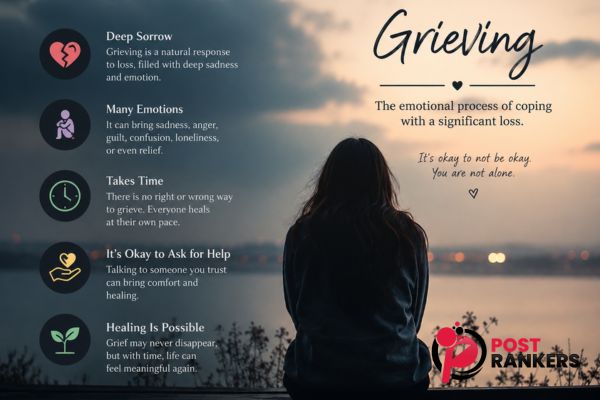
Loss has a way of rearranging everything, even on the days when life seems to be moving on as usual. One moment you’re functioning just fine, and the next you’re blindsided by a wave of sadness triggered by something as small as a song or a familiar smell. That’s grieving in its most honest form, and understanding it can make the experience feel a little less overwhelming, even if it never feels easy.
What Grieving Really Means
Grieving is the emotional, physical, and even spiritual response to loss. While most people associate it with death, grieving can follow any major change, including divorce, job loss, or a serious health diagnosis. It’s not a single emotion but a whole collection of reactions that can shift from one moment to the next, often without warning or explanation.
What makes grieving so confusing is that it doesn’t follow a script. One day might bring numbness, while the next brings anger or guilt seemingly out of nowhere. Because grief touches both the mind and body, people often notice physical symptoms too, such as fatigue, changes in appetite, or trouble sleeping, alongside the emotional turmoil they’re already navigating.
The Stages of Grieving: What to Expect
Most people have heard of the “five stages of grief,” a model that has shaped how society talks about loss for decades. These stages, originally outlined by a psychiatrist studying terminally ill patients, were later applied more broadly to grieving after any significant loss, including the death of a loved one or the end of a relationship.
Denial and Shock
In the early days after a loss, denial often acts as a buffer. It’s the mind’s way of softening a blow that feels too big to process all at once. During this stage, people might feel numb, disconnected, or as if they’re watching their own life from a distance. This isn’t avoidance in a harmful sense; it’s simply the brain’s way of buying time.
Anger and Bargaining
As reality starts to set in, anger frequently follows. This anger might be directed at the situation, at other people, or even at the person who died. Bargaining often shows up around the same time, with thoughts like “what if” or “if only” circling endlessly. These stages can feel uncomfortable, but they’re a completely normal part of grieving.
Depression and Acceptance
Eventually, many people experience a deep sadness that can resemble depression. This stage often involves withdrawal, crying, and a sense of emptiness that feels hard to shake. Over time, though, acceptance tends to emerge—not as forgetting or “getting over” the loss, but as learning to live alongside it while slowly finding moments of peace again.
It’s worth repeating that these stages rarely happen in a tidy, predictable order. Grieving tends to loop back on itself, and someone might feel like they’ve reached acceptance only to be pulled back into anger or sadness weeks later. That back-and-forth movement doesn’t mean something is wrong; it simply reflects how nonlinear the grieving process truly is.
Beyond the Five Stages
While the five-stage model remains popular, it’s far from the only way to understand grieving. Some experts use a seven-stage approach that adds steps like guilt and processing, offering a more detailed picture of the emotional landscape. Others find that numbered stages don’t capture their experience at all, and that’s perfectly okay too.
The Dual Process Model
One particularly helpful alternative is the Dual Process Model, which frames grieving as a constant movement between two states. On one side, there’s loss-oriented coping, which involves directly confronting painful emotions and memories. On the other, there’s restoration-oriented coping, which focuses on adjusting to daily life, taking on new responsibilities, and finding small moments of joy again.
Grief as a Roller Coaster
Many people describe grieving less like a staircase and more like a roller coaster, full of unpredictable highs and lows. Early on, the drops tend to feel steeper and the climbs shorter. As time passes, those dips usually become less intense and less frequent, even if they never disappear completely. Anniversaries, holidays, and milestones can still bring sudden waves of emotion, even years later.
How Long Does Grieving Last?
There’s no universal timeline for grieving, and anyone who tells you there should be is oversimplifying a deeply personal process. For many people, the most intense symptoms ease within the first couple of years, though the loss itself never fully disappears from their lives. Certain types of loss, however, tend to extend the grieving process significantly.
Losing a spouse, child, or parent often results in a longer, more complicated grieving journey compared to other types of loss. Similarly, sudden or traumatic deaths tend to be harder to process than losses that were anticipated, since there’s less time to prepare emotionally. Both factors can stretch out the timeline far beyond what people expect from themselves.
When Grieving Becomes Complicated
For most people, grieving gradually becomes easier to carry, even if it never fully goes away. But for some, the pain doesn’t ease over time and instead continues to disrupt daily functioning for months or even years. When this happens, it may be classified as prolonged or complicated grief, a condition that can benefit significantly from professional support.
Recognizing complicated grief matters because it’s treatable, yet many people don’t realize that what they’re experiencing has a name. If grieving continues to interfere with work, relationships, or basic daily tasks long after the loss occurred, reaching out to a therapist or grief counselor can make a meaningful difference, rather than simply waiting for things to improve on their own.
Healthy Ways to Cope With Grieving
While grieving can’t be rushed or skipped, there are ways to move through it that support healing rather than prolong suffering. Talking openly about the loss, rather than avoiding the subject, often helps people process emotions instead of bottling them up. Likewise, allowing space for both sadness and moments of laughter can feel jarring at first, but it’s a healthy sign of adjustment.
Taking care of your physical health also plays a bigger role in grieving than most people realize. Sleep, nutrition, and gentle movement can all influence emotional resilience during this time. Many people also find comfort in rituals, whether that means visiting a meaningful place, keeping a journal, or marking anniversaries in a way that honors the person or thing they’ve lost.
Leaning on Support Systems
Grieving alone can make an already heavy experience feel even heavier. Support groups, whether in person or online, connect people with others who understand exactly what they’re going through without needing lengthy explanations. Friends and family can offer comfort too, even if they sometimes struggle to find the right words.
For those who feel isolated in their grief, professional counseling offers a space specifically designed for this kind of processing. A therapist trained in grief work can help someone untangle complicated emotions, navigate guilt, and slowly rebuild a sense of normalcy without pressure or judgment.
Final Thoughts
Grieving is not something to “get over” on a deadline, nor is it a sign of weakness when it lingers longer than expected. It’s a deeply human response to loss, one that ebbs and flows in ways that rarely make sense in the moment. By understanding what grieving actually involves, and recognizing when extra support might help, the process becomes a little more manageable, even on the hardest days.
